Enter password to view
Kinto One Fleet
Turning fragmented fleet management into a proactive digital workflow
My role
Senior Product Designer
Company
Toyota Connected
Themes
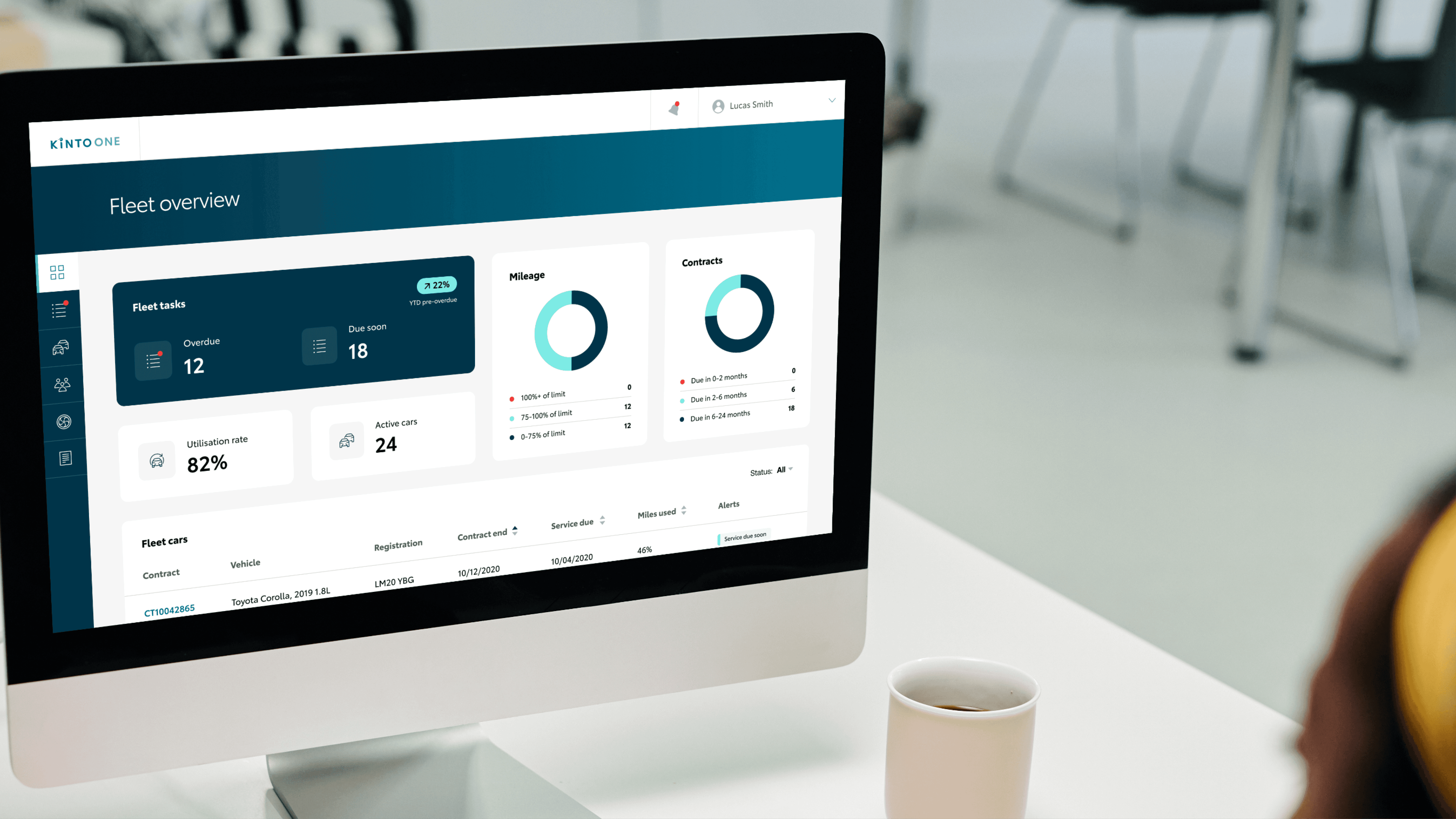
Background
Kinto One is a flexible car leasing service for businesses. While the service simplified access to vehicles, fleet management remained largely manual - spread across spreadsheets, calendar reminders, disconnected tools and reactive workflows.
The opportunity was to turn fleet management into a proactive, guided experience - helping businesses reduce costs, stay compliant and keep teams moving with less operational burden.
I led design from early discovery through to the launch of Kinto One Online - a new web app that surfaced the right information at the right time and guided fleet managers through high-impact actions across mileage, maintenance and contract management.
Framing the problem
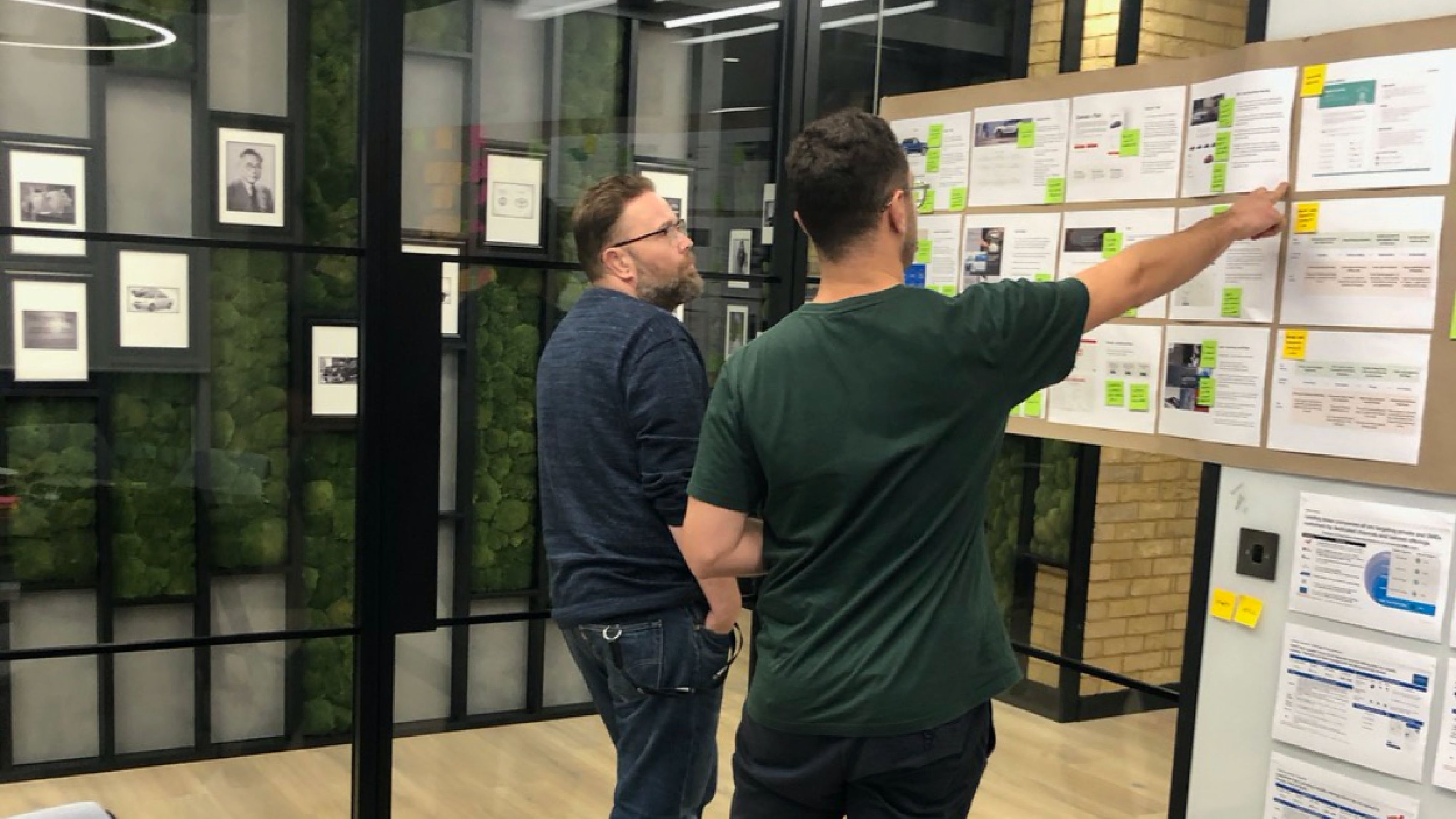
We began by clarifying business goals, assumptions and customer needs through workshops with the Kinto team. Early research showed that fleet management was often a secondary responsibility within smaller businesses rather than a dedicated role - meaning any solution needed to be simple, proactive and low-effort.
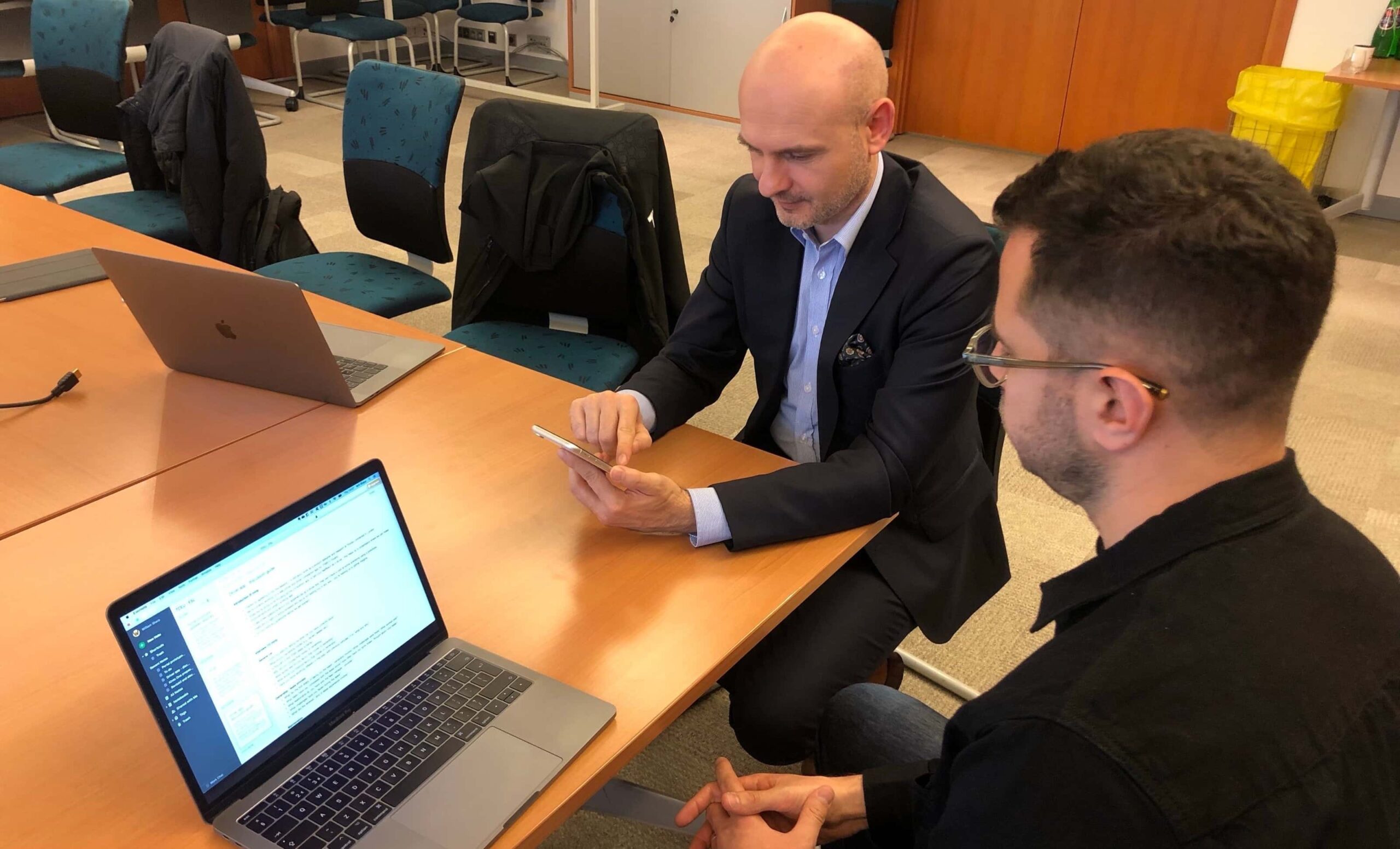
I led interviews and workflow exploration with prospective fleet managers to understand their jobs-to-be-done, pain points and how they managed vehicles day to day.
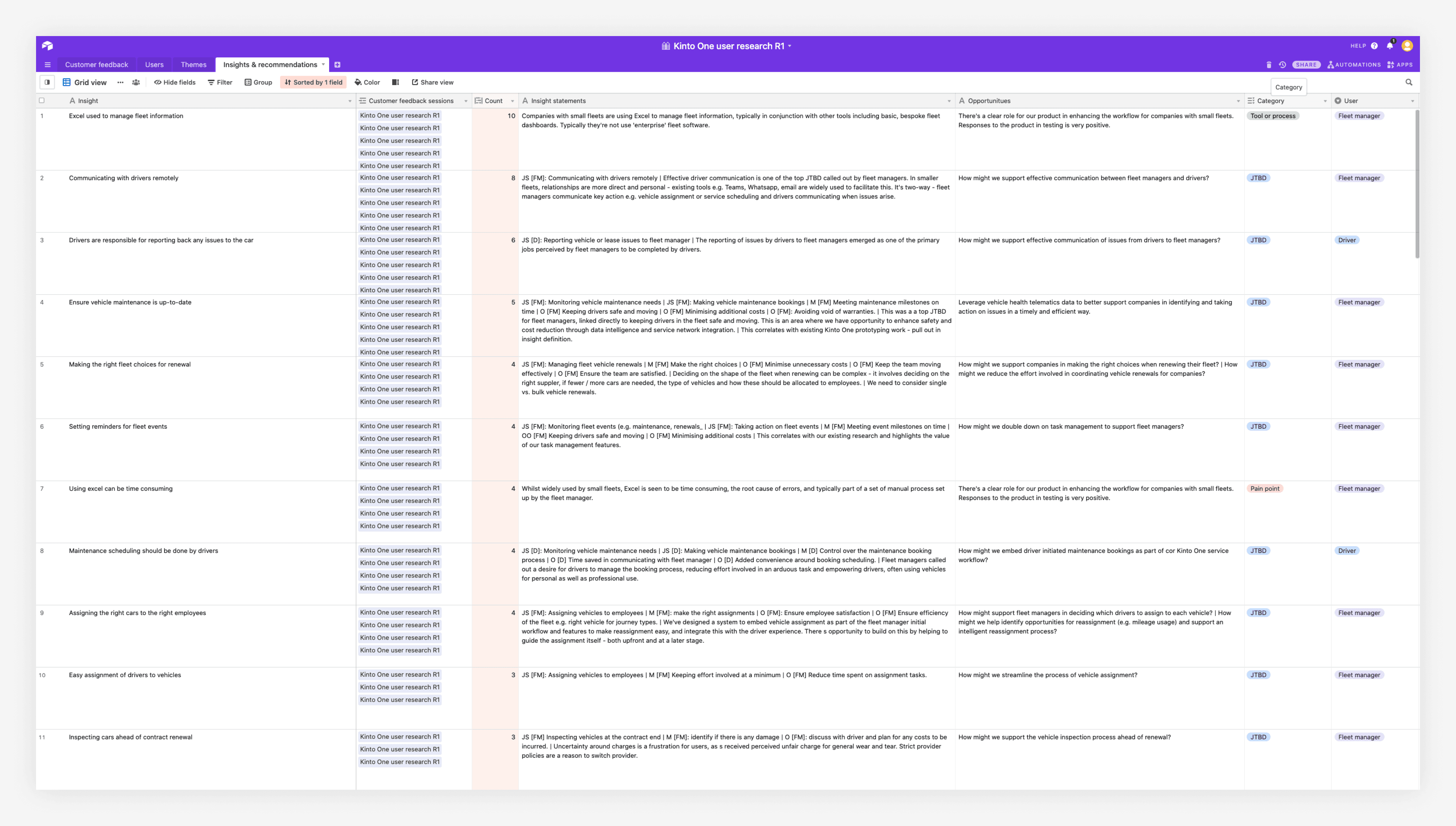
Three recurring problems emerged:
Reactive task management created risk and cost
Fleet managers relied on personal reminders and scattered tools to track key milestones, increasing the risk of missed maintenance, mileage thresholds and contract renewals.
Poor mileage visibility led to unexpected charges
Overages were often discovered when vehicles were returned, creating avoidable costs and frustration.
Maintenance coordination was inefficient
Managers wanted to keep vehicles safe and compliant but struggled to coordinate bookings and often relied on drivers to manage parts of the process themselves.
Together, these pointed to a clear opportunity: replace reactive admin with proactive, task-driven fleet management.
Setting the direction
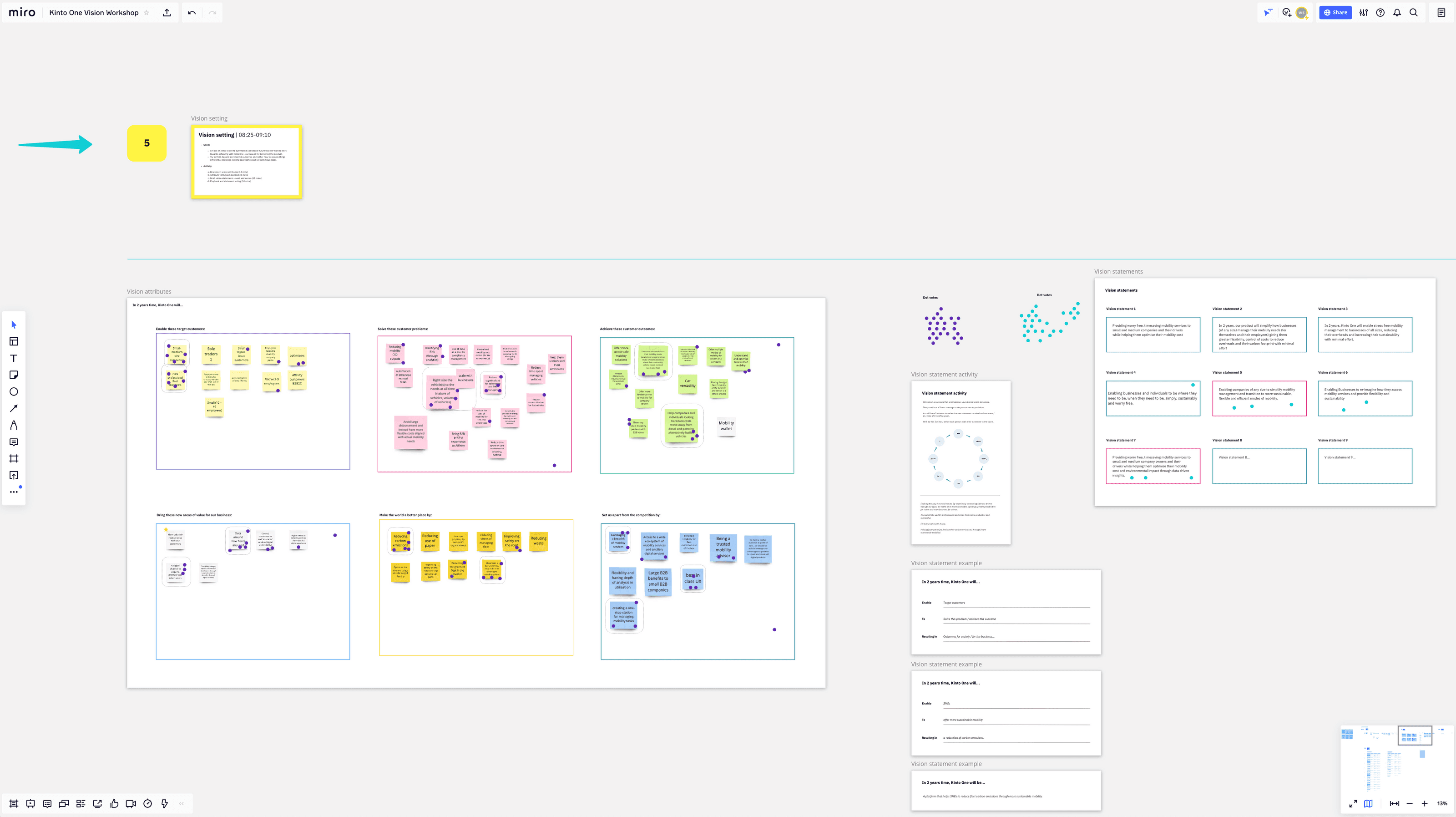
I facilitated a vision workshop with the Kinto team to align around a longer-term direction: helping businesses simplify fleet operations while moving towards more flexible, efficient and sustainable mobility.
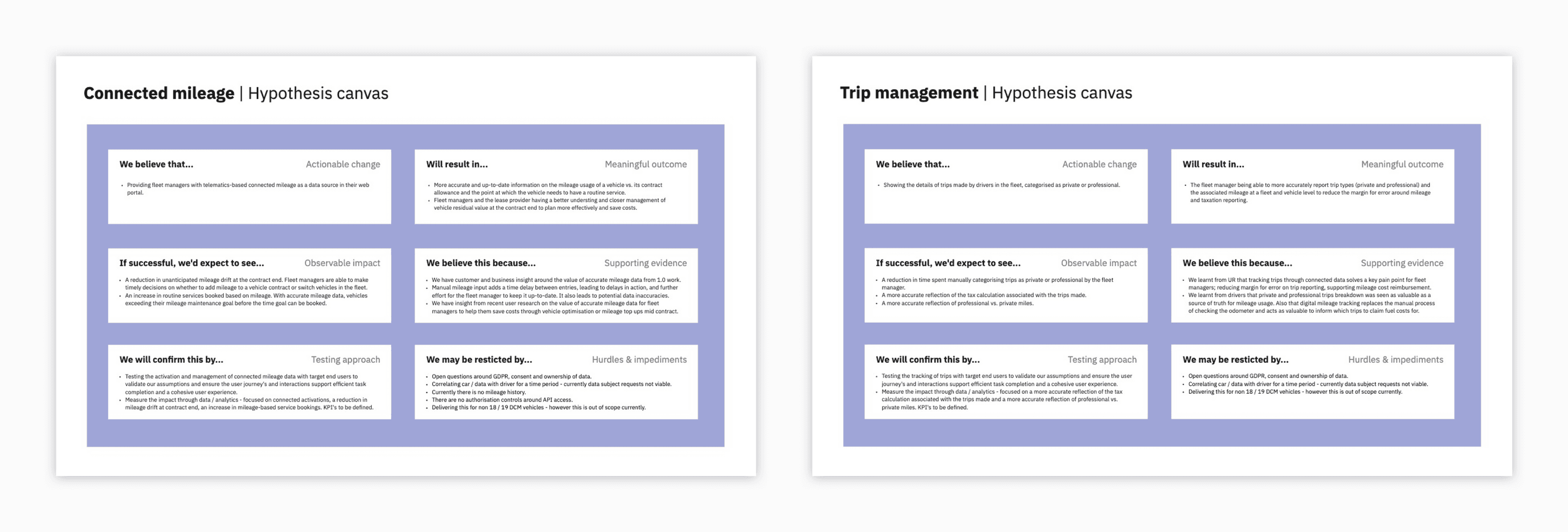
Building on the research, I translated this vision into clear opportunity areas and product hypotheses, balancing customer value, business impact and feasibility. This gave the team a shared framework for deciding what Kinto One Online should solve first and what could follow over time.
Shaping the product
With the core opportunities defined, I explored how fleet visibility, mileage tracking, maintenance and contract management could become clearer, more proactive workflows.
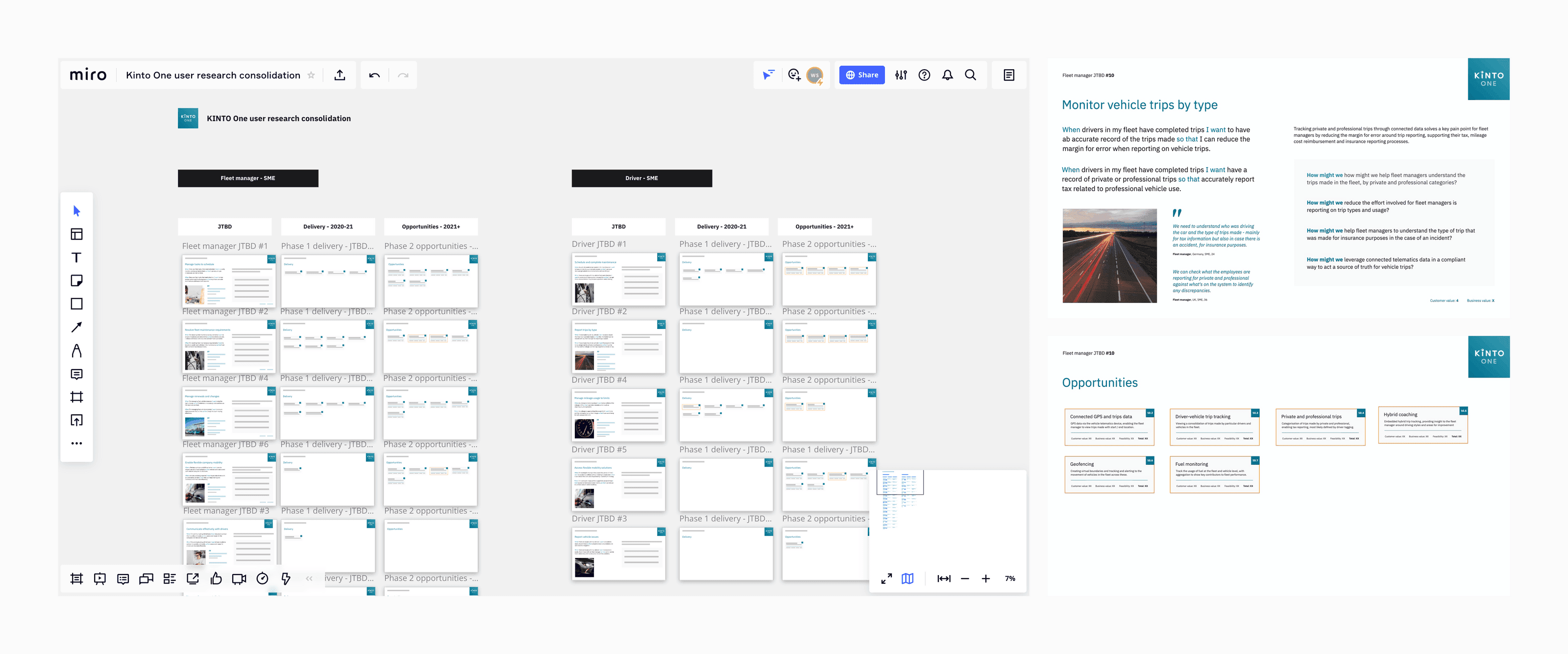
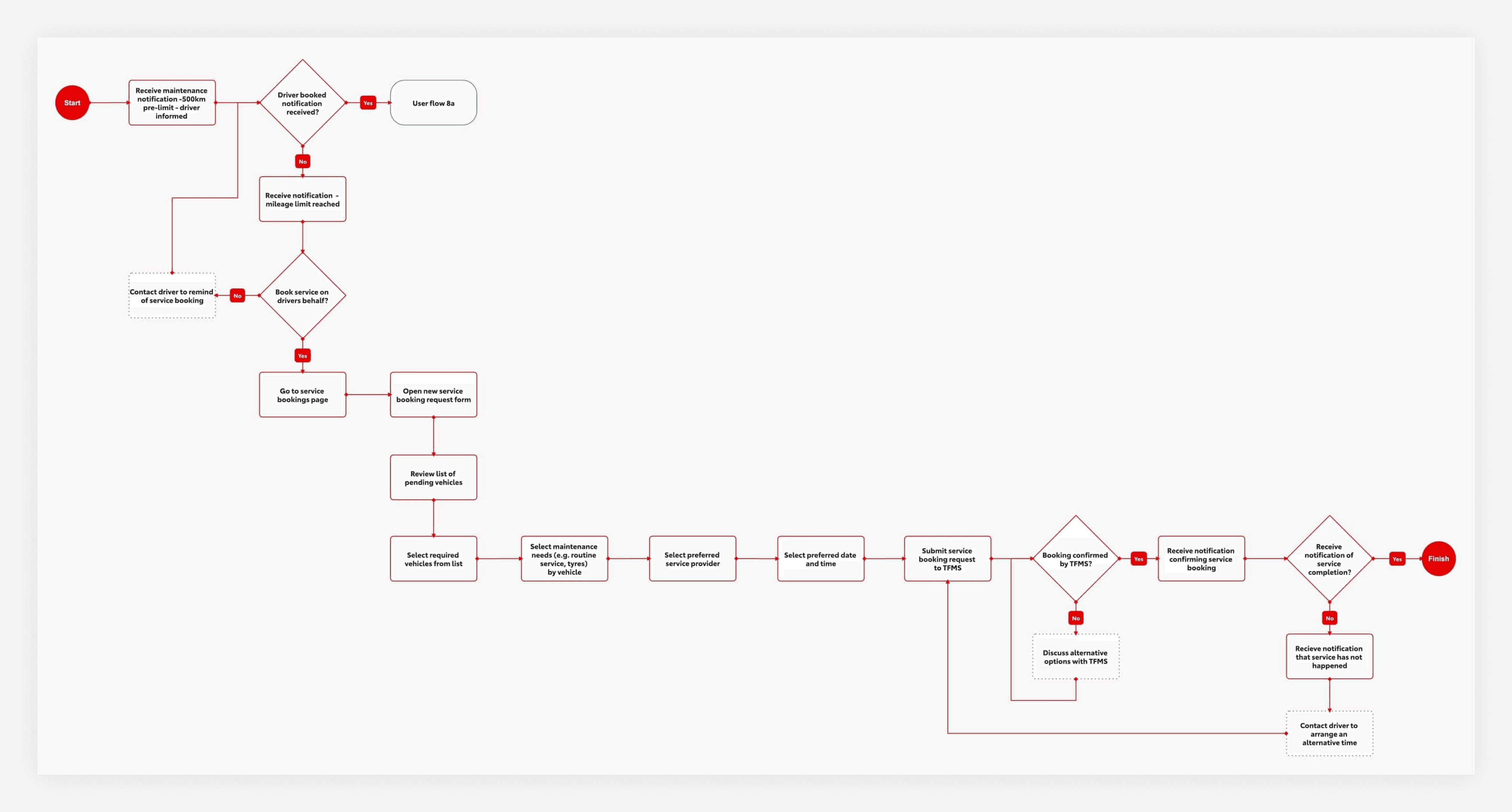
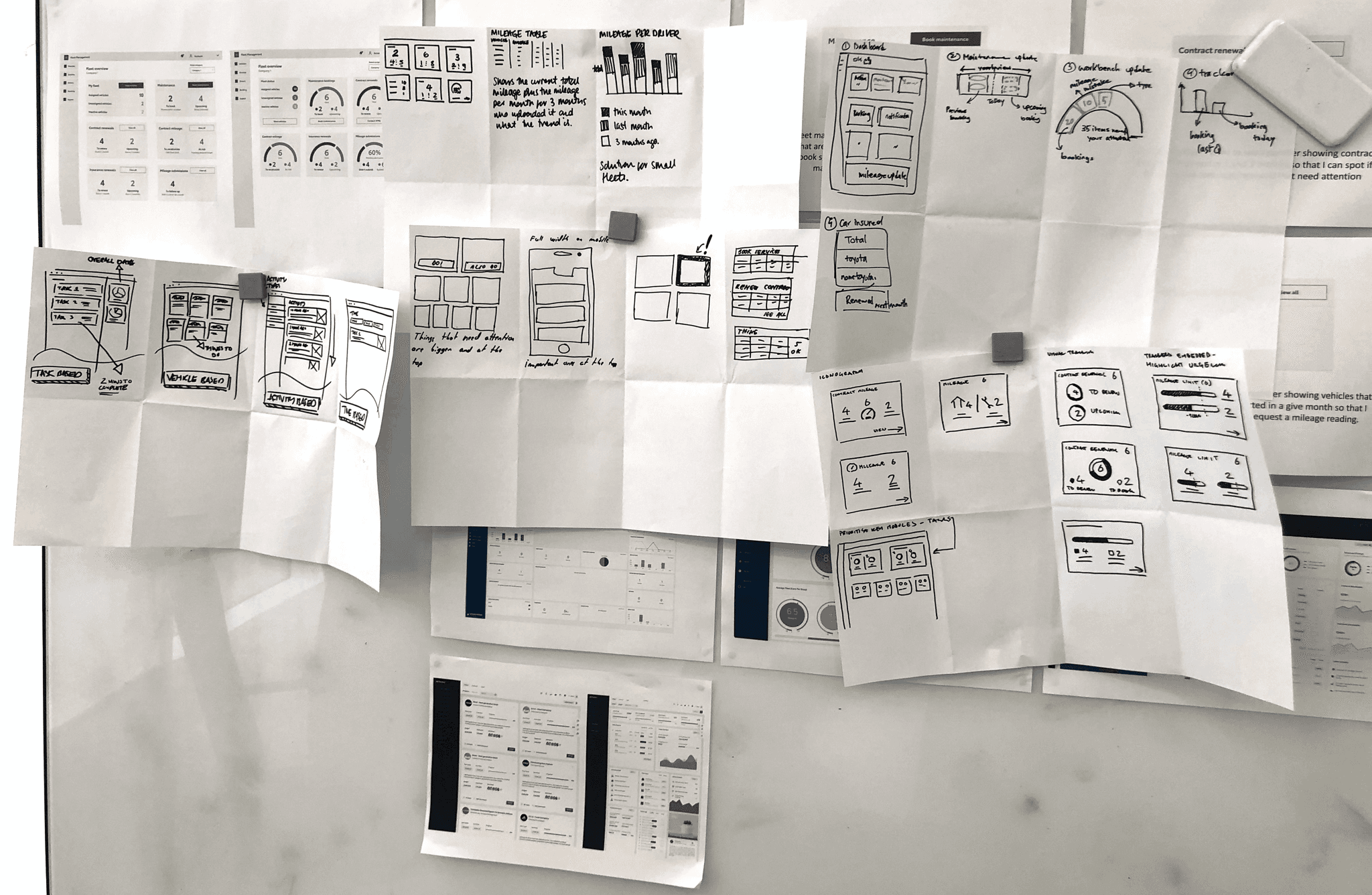
I moved quickly between sketches, flows and low-fidelity prototypes, testing emerging concepts with fleet managers to validate job stories, uncover usability issues and identify new opportunities.
The findings helped us move from broad problem areas to a clearer product shape - defining the core workflows and interactions we could prioritise, refine and take forward.


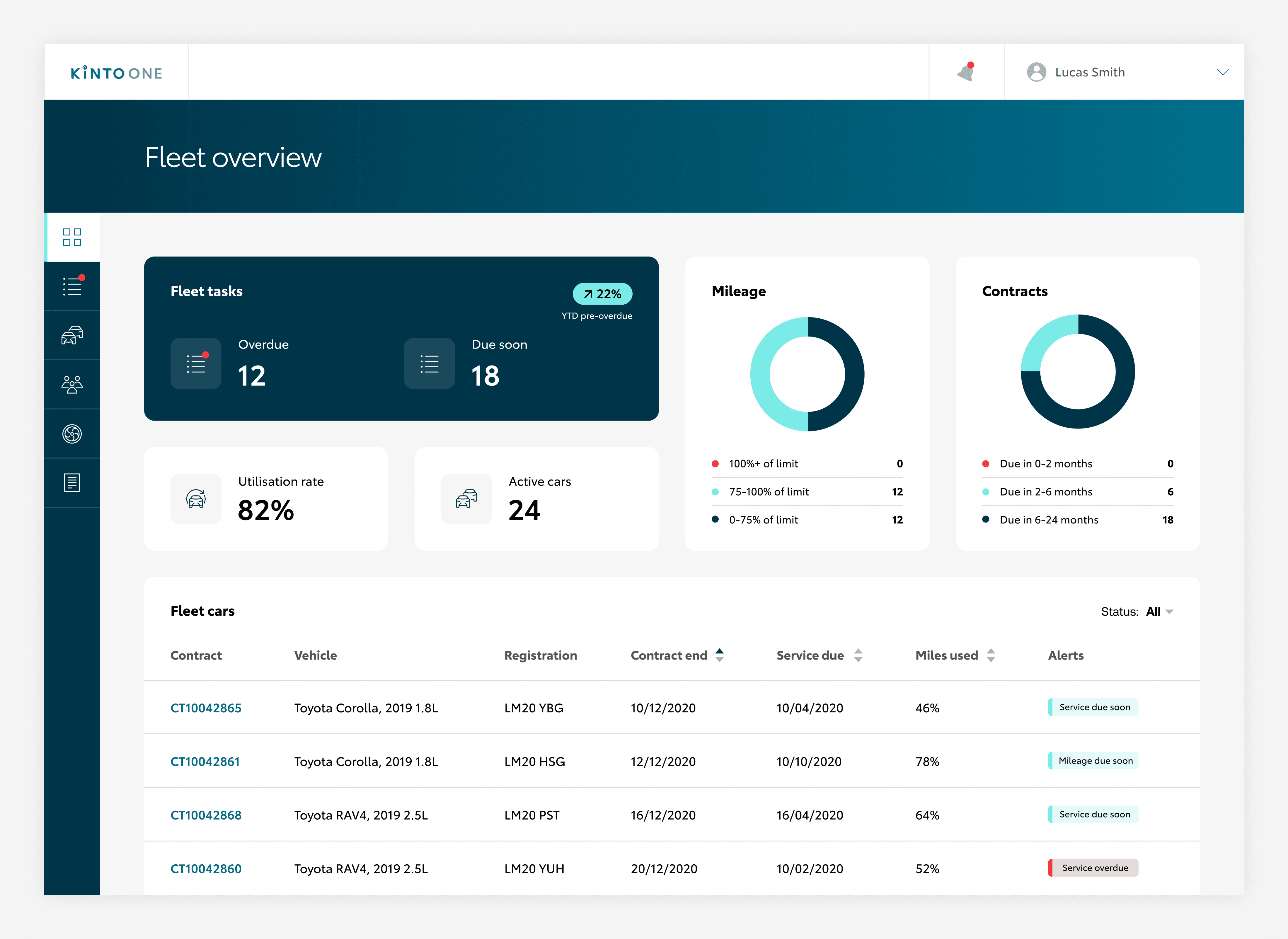
A real-time fleet dashboard
The home experience was designed as a command centre for fleet health - combining real-time vehicle data with the tasks and upcoming actions that needed attention.
Through multiple rounds of testing, we refined the hierarchy to surface the most important metrics upfront while giving managers quick access to deeper vehicle information.
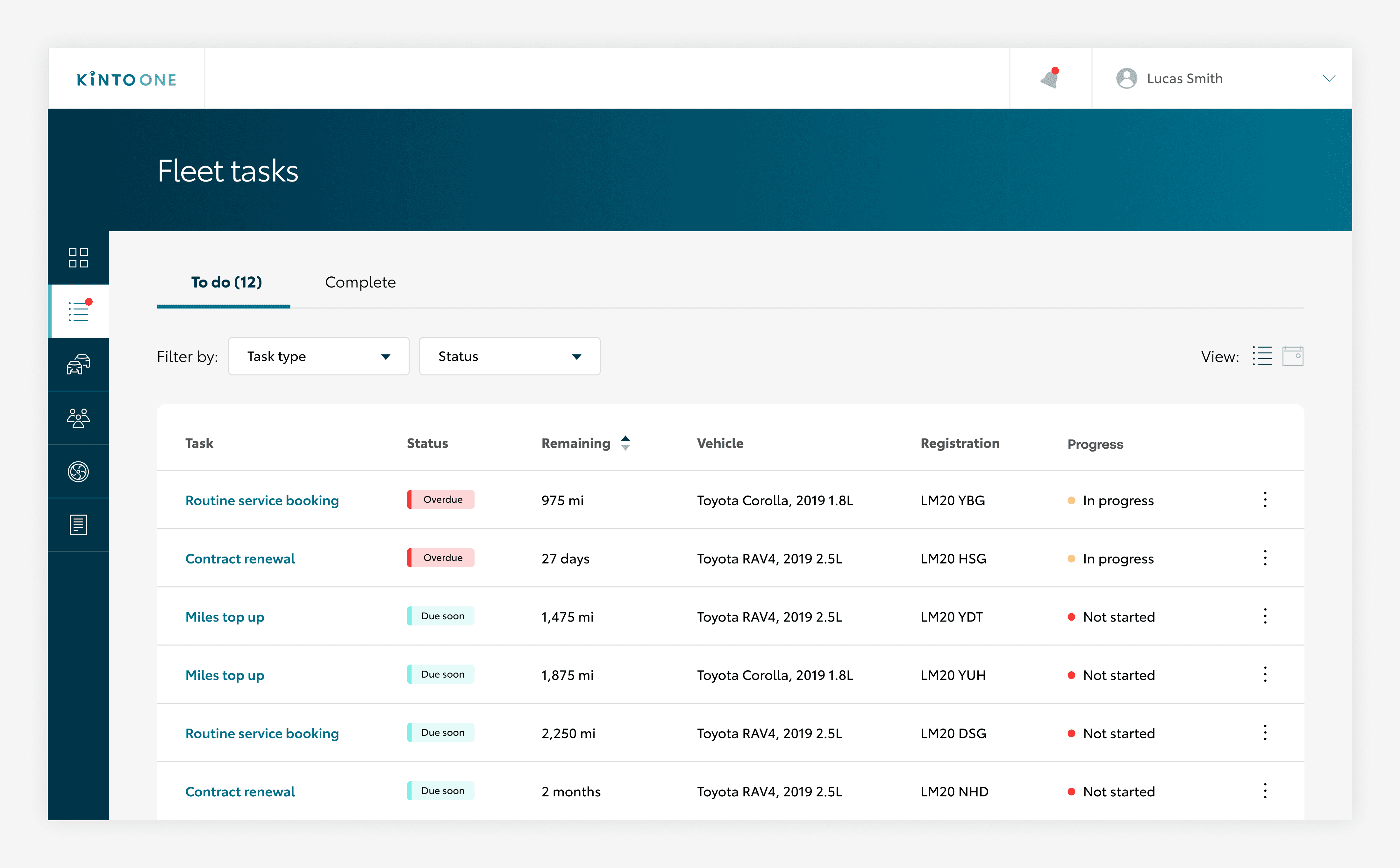
A task-driven operating model
At the core of the product was a task-driven model built around the moments fleet managers needed to act - from approaching mileage thresholds and maintenance milestones to contract renewals.
Tasks were surfaced as due soon, overdue or in progress, helping managers understand what needed attention and prioritise action at a glance. Multi-stage tasks were given clear progress states to make longer workflows easier to follow.
This brought previously scattered, reactive workflows into one proactive system.
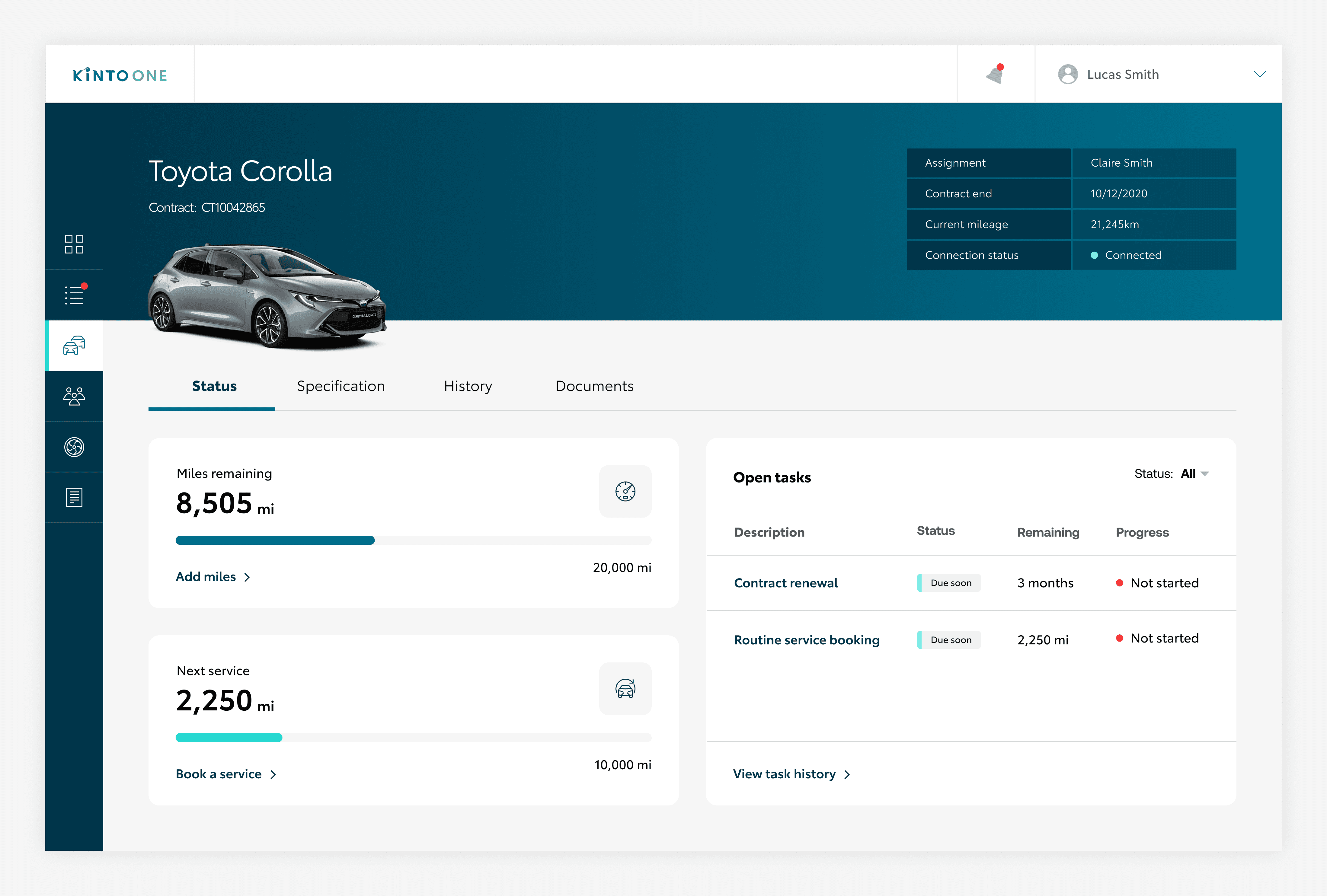
Making vehicle pages actionable
Each vehicle had a dedicated page bringing together real-time status, mileage, maintenance history, active tasks and upcoming actions.
Testing showed that fleet managers understood tasks more easily when they appeared in the context of the relevant vehicle, rather than only within a central task list.
We therefore surfaced actions in both places - giving managers a fleet-wide view while making next steps clear at the vehicle level.
Connecting data and onboarding fleets
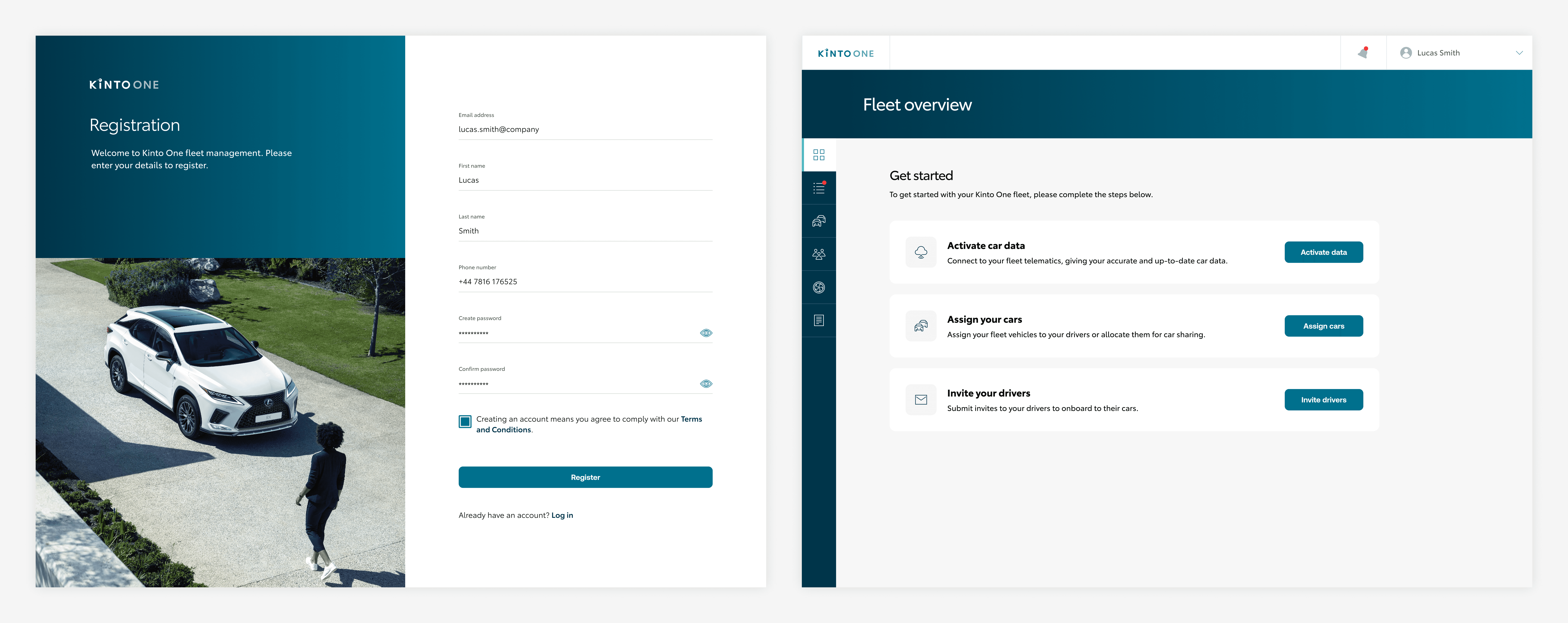
To reduce friction at setup, we introduced guided onboarding that walked fleet managers through activating telematics data, assigning vehicles and inviting drivers.
A major challenge was enabling connected data across multiple vehicles - something previously only available at individual-car level. Working closely with Toyota’s data, legal and engineering teams, I helped define a scalable approach that balanced usability, compliance and technical feasibility.
This created the data foundation for real-time fleet visibility across the wider product.
Outcomes
Kinto One Online launched into alpha with a group of fleet managers, generating strong qualitative feedback and validating the core workflows before being rolled out more broadly.
The product became a core part of Kinto’s digital offering, turning fragmented fleet administration into a guided, task-driven experience built around connected vehicle data.
The work also established a foundation for future mobility products, with reusable patterns for proactive tasks, real-time data and fleet-level management.