Enter password to view
ZOE meal planning
Designing a new meal planning experience from discovery through to launch
Company
ZOE
My role
Product Design Lead
Themes
Background
ZOE is a science-based personalised nutrition company helping people make smarter food choices. To understand what was getting in the way of sustained behaviour change, we ran a diary study and identified meal planning as a key friction point for members trying to stay on track.
Planning is difficult for most people, but ZOE introduced additional complexity - balancing ZOE-friendly meals with everyday needs such as family cooking, turning recommendations into action and maintaining consistency week to week.
How might we make weekly planning and shopping easier, while integrating both meaningfully into the ZOE programme?
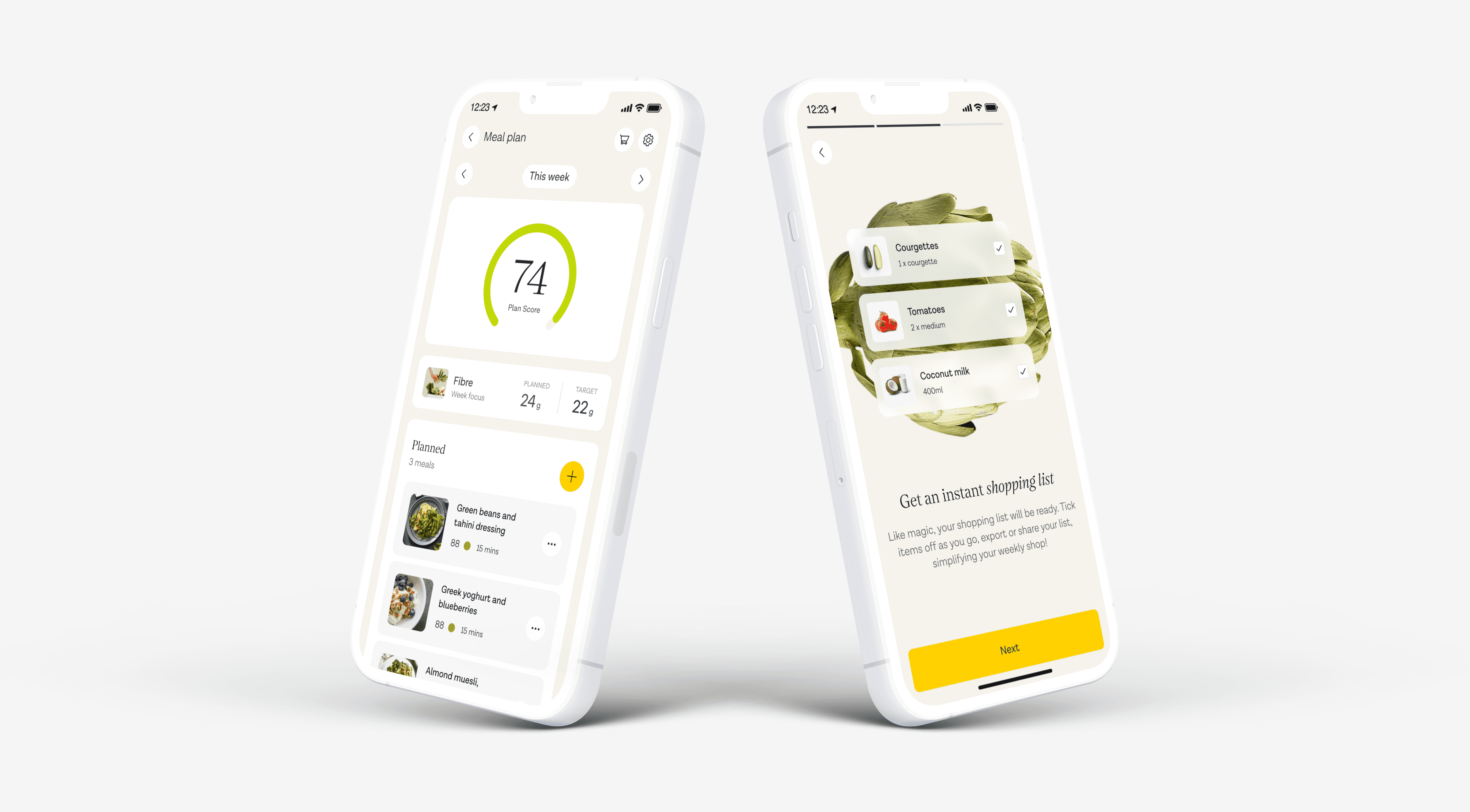
As design lead, I worked with a cross-functional team to take a new meal planning experience from discovery through to launch - shipping early iterations, embedding it as a core app feature and exploring future directions.
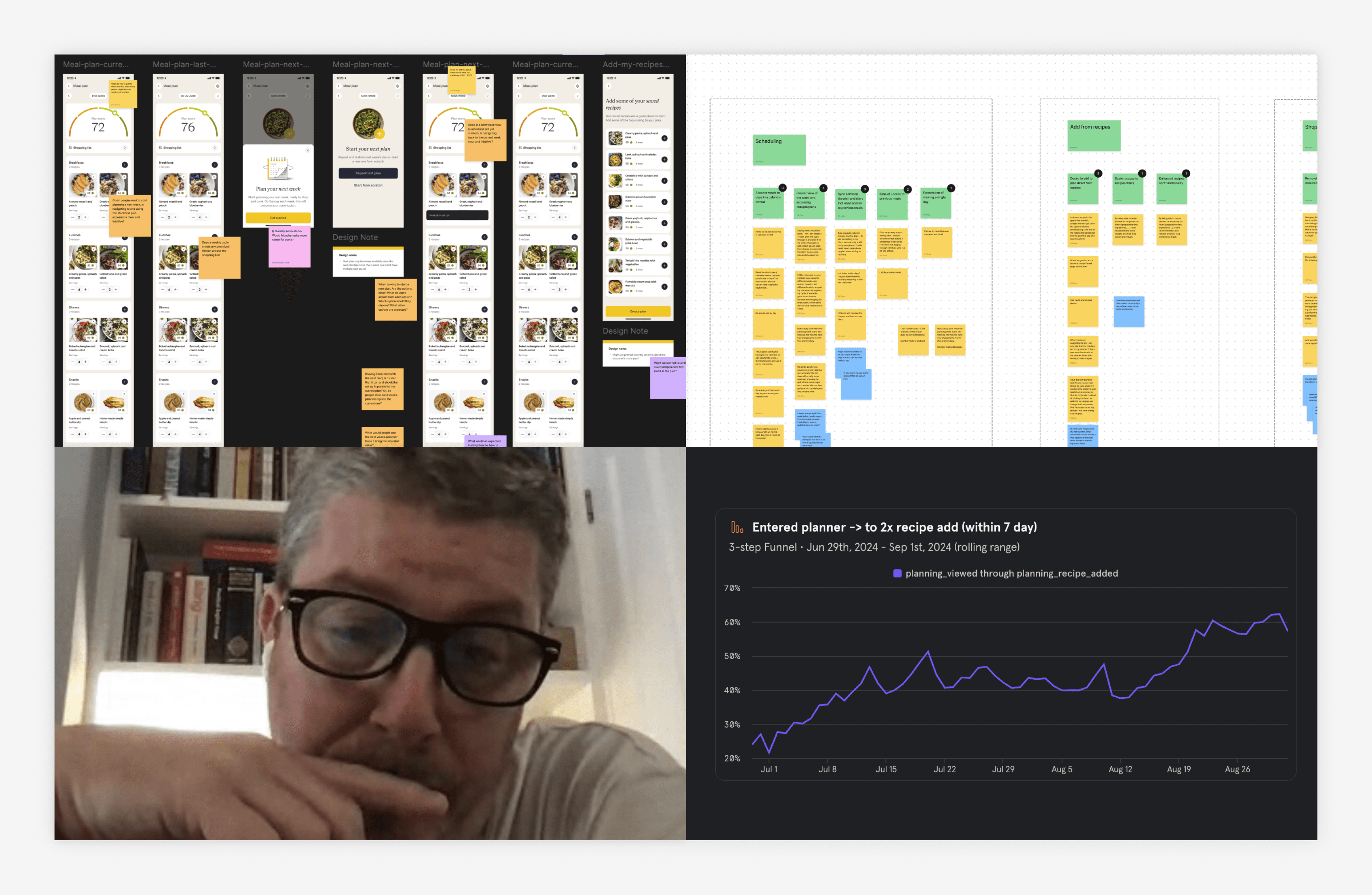
Learning from members
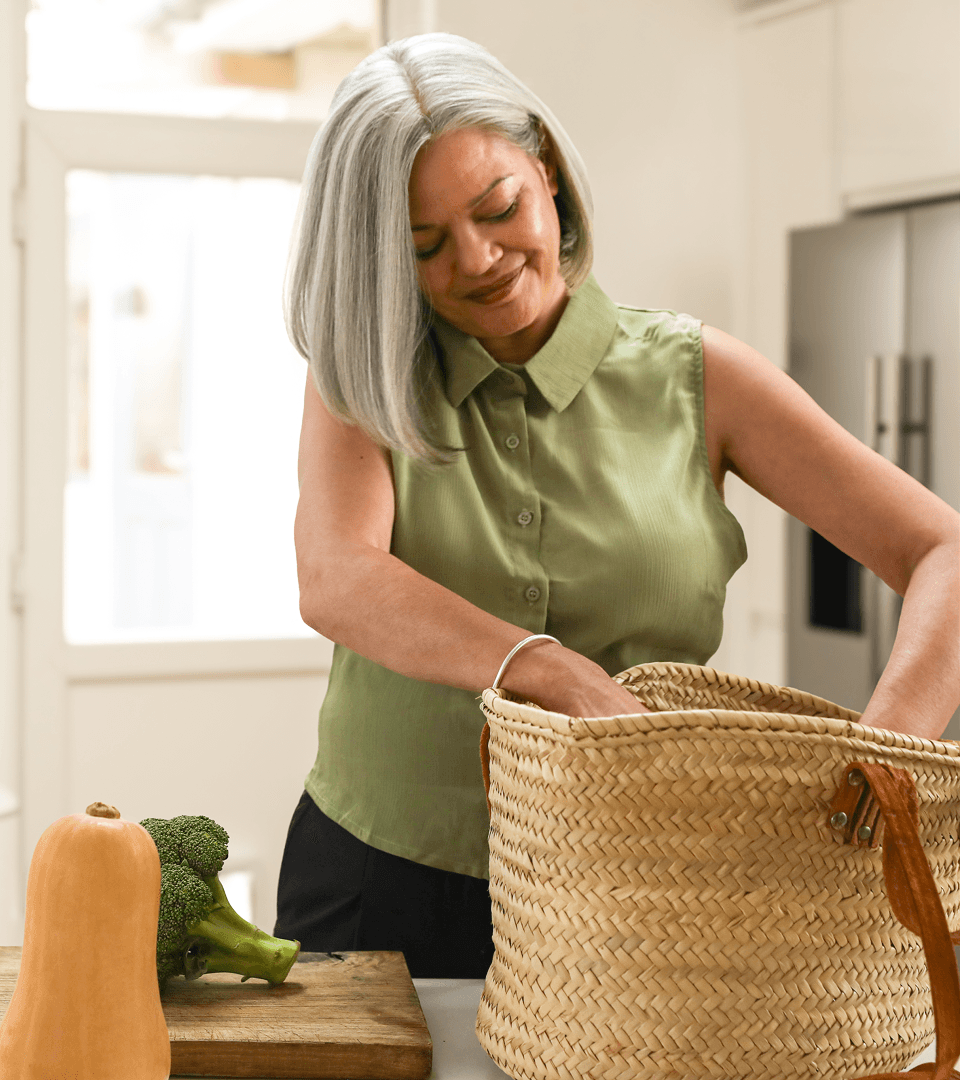
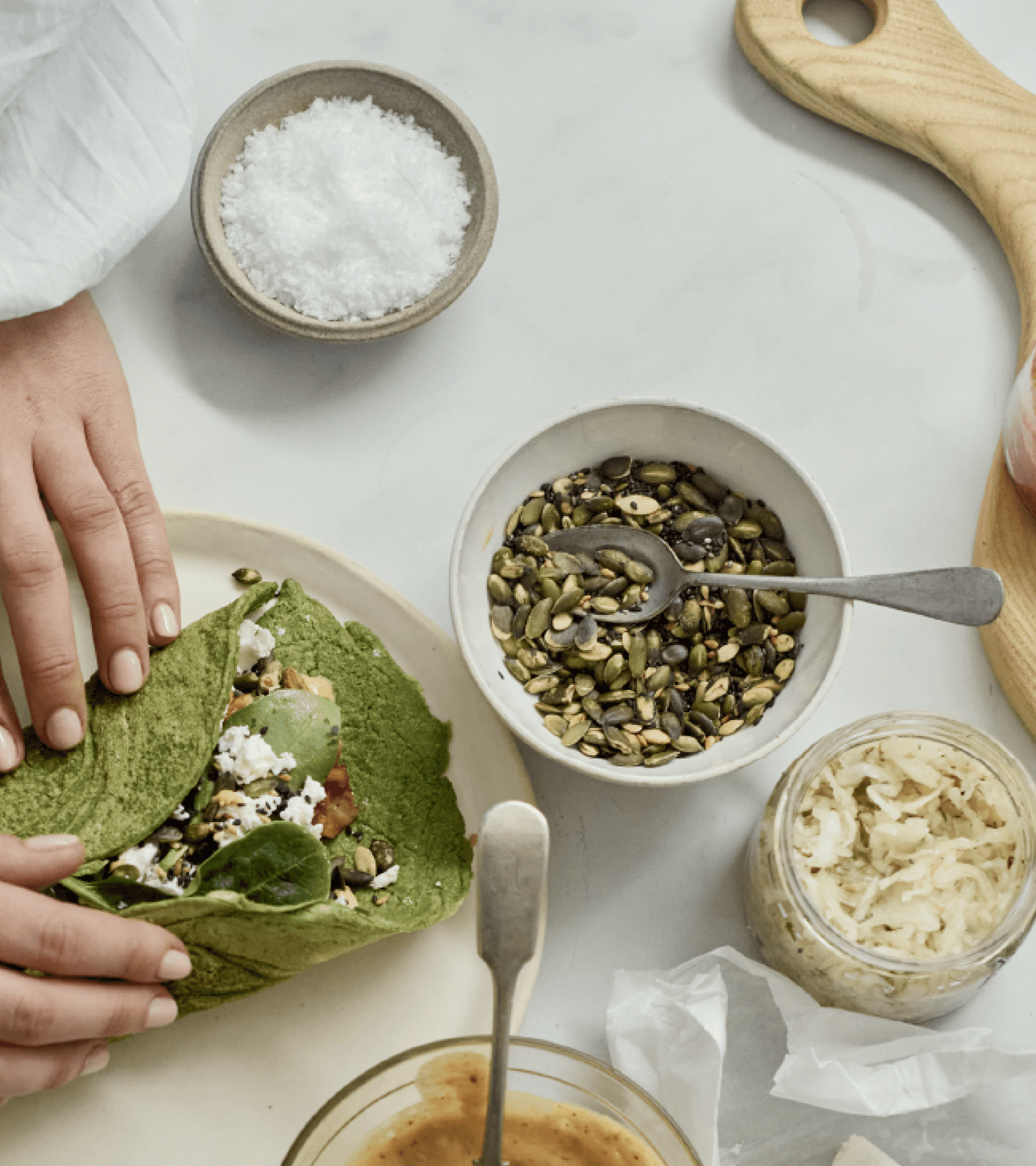
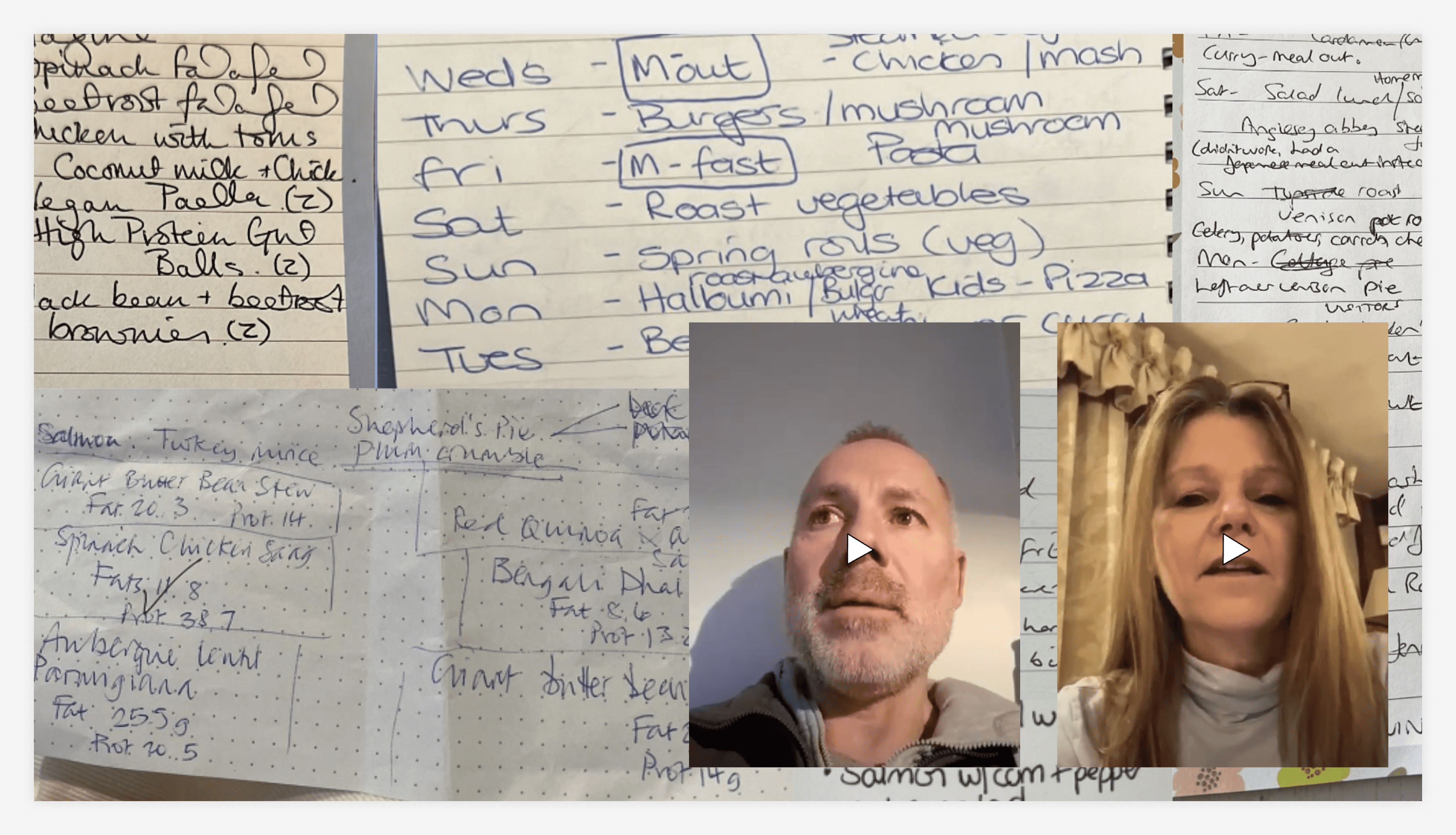
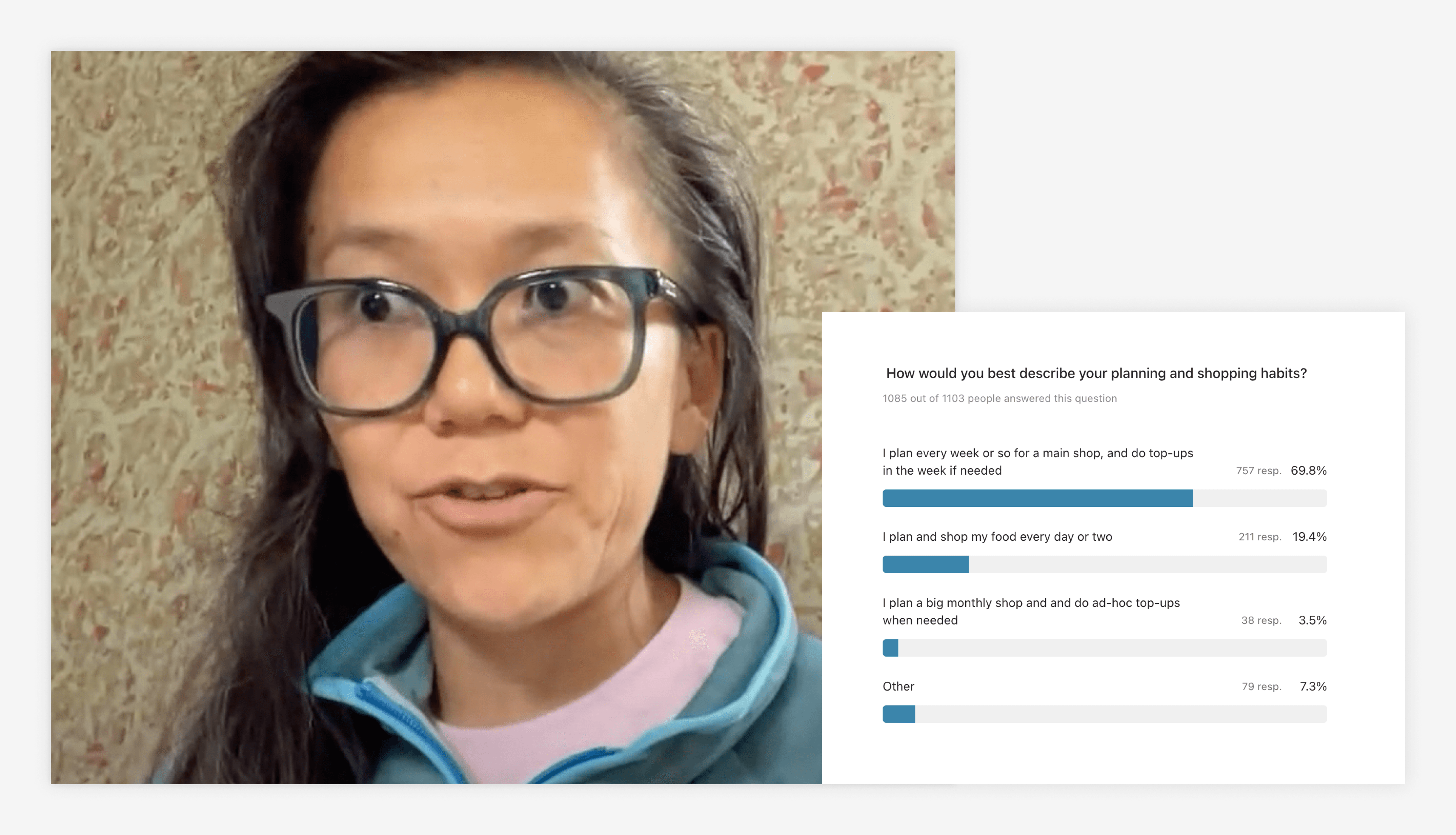
I led interviews and surveyed over 1,100 members to understand how meal planning fitted into their lives. Three themes shaped the direction:
Planning was weekly and time-constrained
Most members planned from Friday to Sunday, but struggled to fit it into busy routines. The experience needed to align with existing weekly habits, without adding daily overhead.
Planning and shopping took too much effort
Members relied heavily on shopping lists, but manually collating ingredients across recipes was time-consuming. Reducing effort at the moment of intent became critical.
Effort outweighed perceived value
Members weren’t always sure what to eat to meet weekly goals, and meal logging felt repetitive - particularly for repeat meals. Planning needed to replace effort elsewhere in the experience, not add to it.
Defining success and scope
I facilitated workshops with product, engineering, nutrition and coaching partners to align on direction, constraints and how we would measure success.
We focused on metrics that reflected habit formation:
Adoption: 40% of members add 2+ meals
Retention: 30% plan for 2+ consecutive weeks
Frequency: 5+ meals planned per user per week
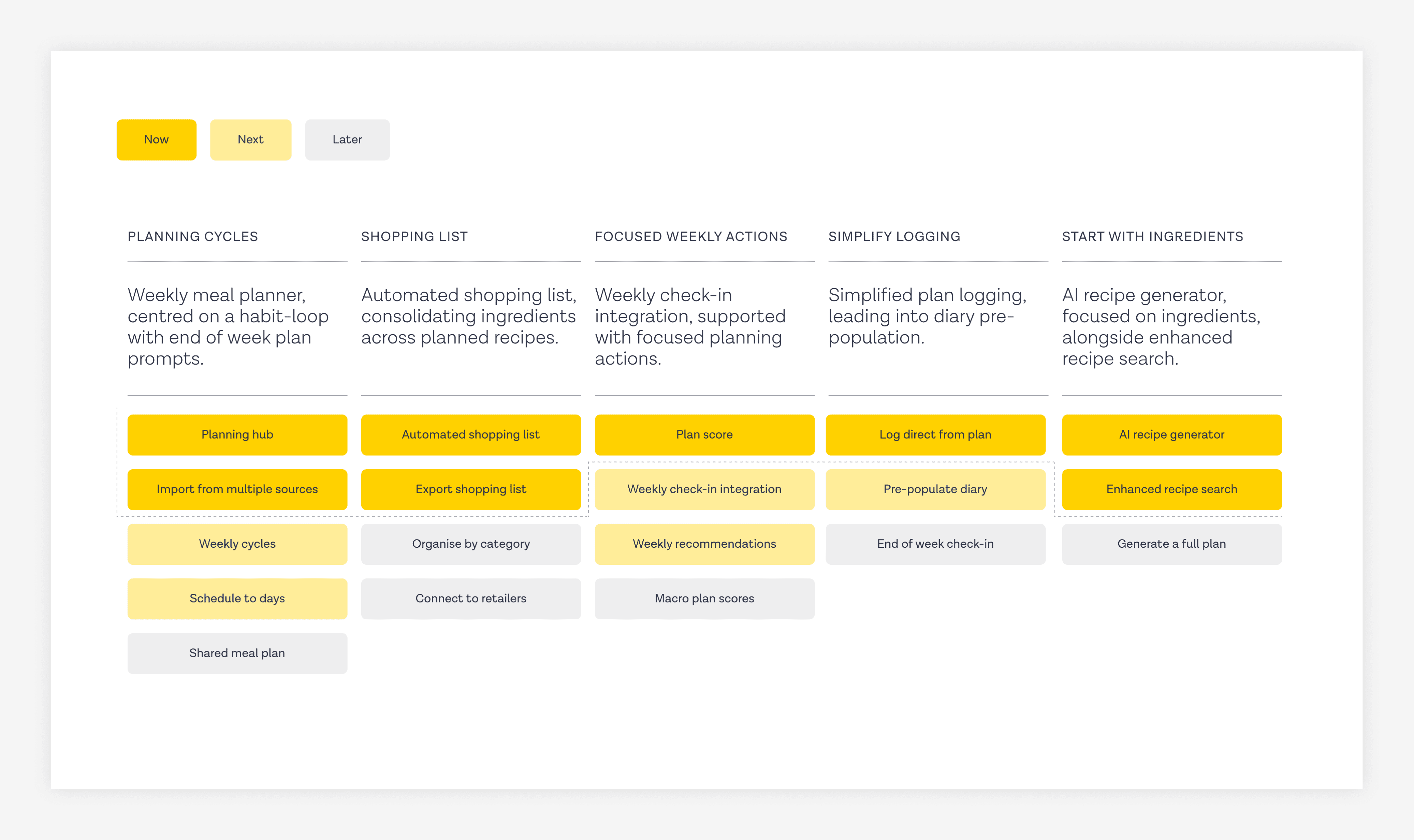
This helped us define a focused first release - enough to validate whether meal planning could become a sustained behaviour, while keeping scope small enough to ship, learn and iterate in-market.
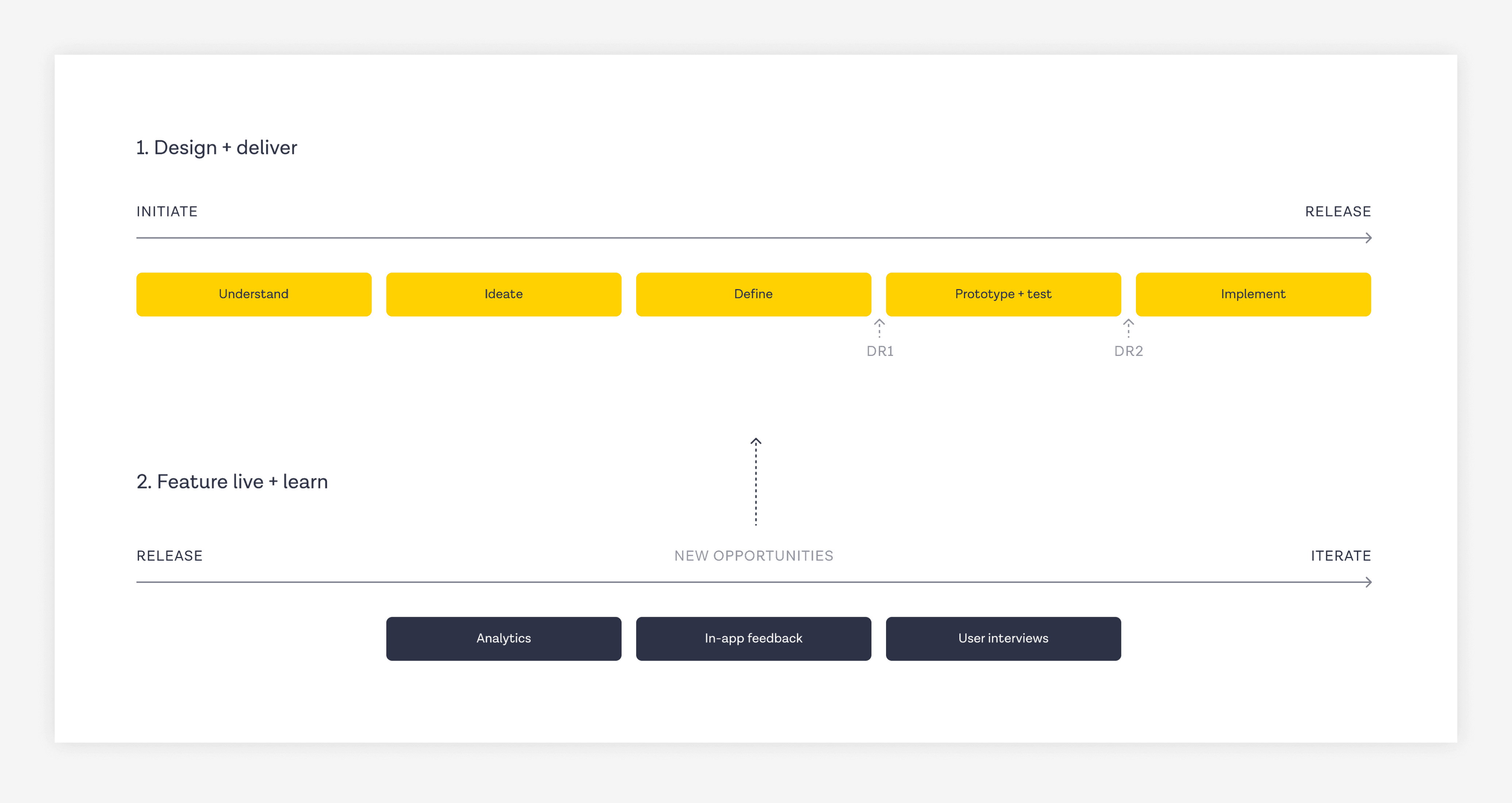
I led design across two parallel streams:
Design + deliver: moving from problem framing through MVP delivery, testing and staged releases
Live + learn: using analytics, in-app feedback and member interviews to guide post-launch iteration
Running these streams in parallel helped us move quickly without over-designing upfront - learning from real usage and improving the experience over time.
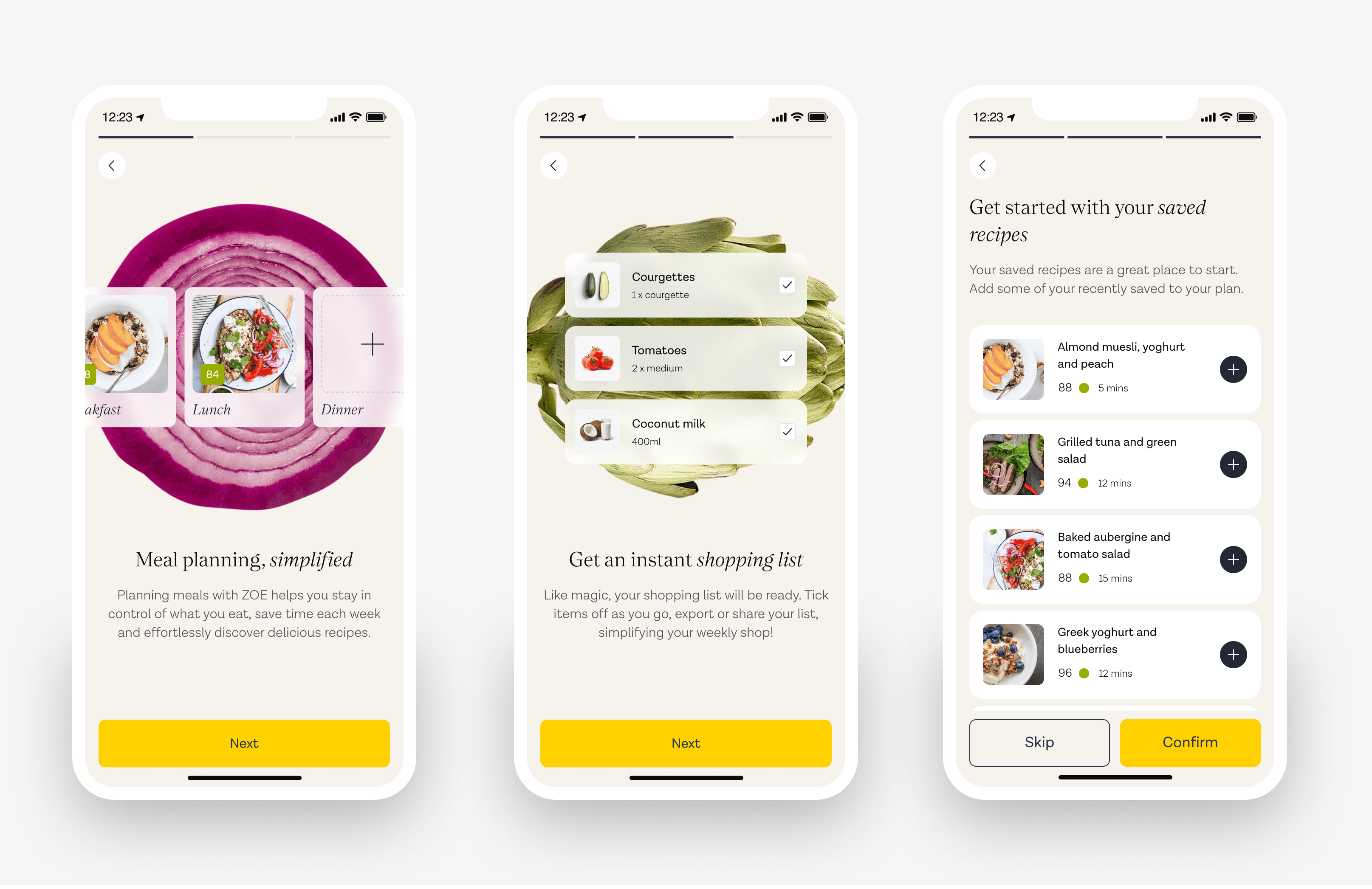
Enabling confident first plans
To support first-time users, we designed onboarding that helped members create their first meal plan without starting from a blank canvas.
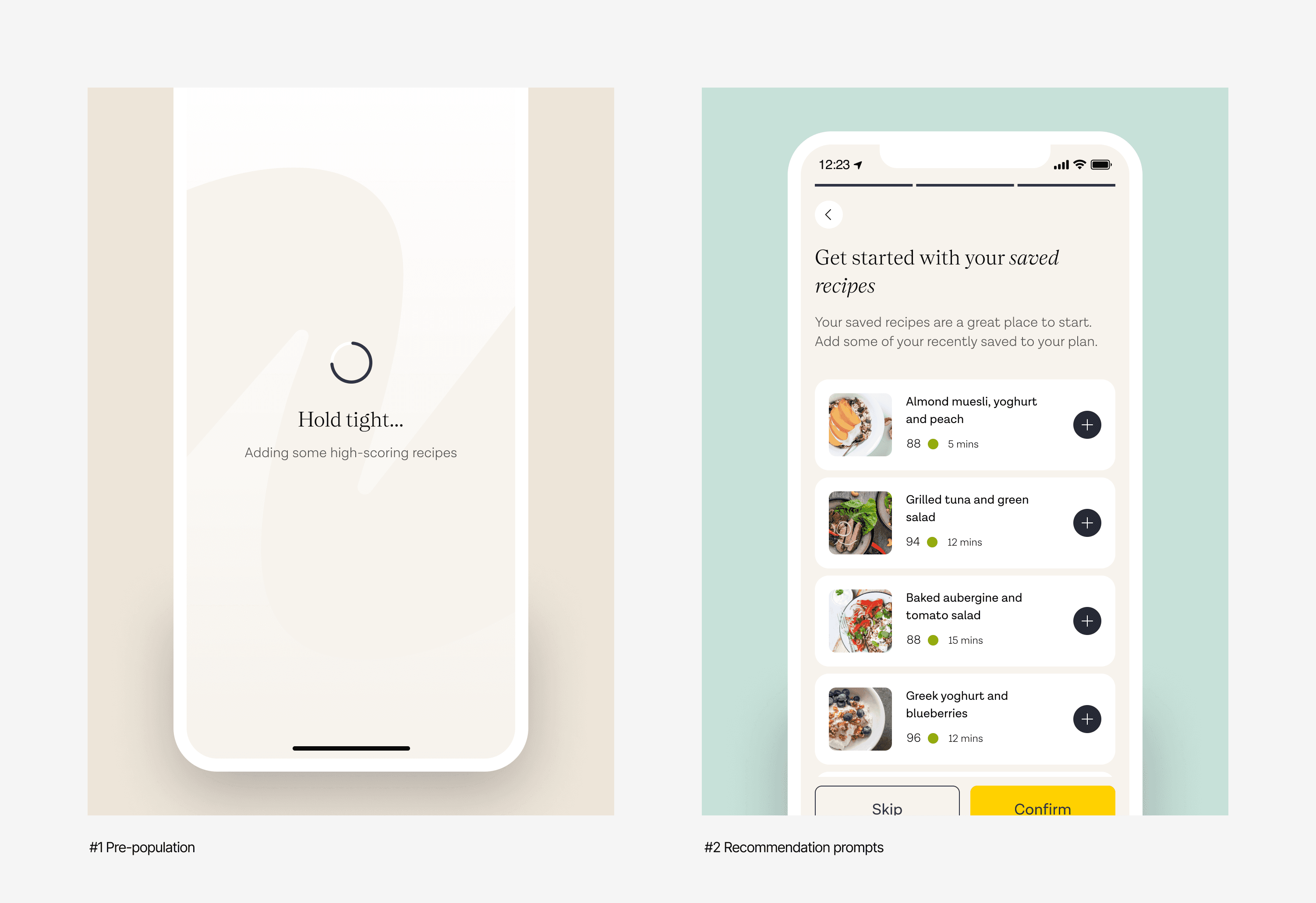
Our initial approach pre-populated recipe sets based on dietary preferences. While this reduced effort, members felt constrained by the lack of choice and personal relevance.
We shifted to flexible recommendations that members could actively choose from, including saved meals where intent was already clear. This balance of guidance and control significantly increased first-plan conversion.
Evolving the planner
The planner brought weekly meals, projected ZOE scores, recipe discovery and an automatically generated shopping list into one place - directly addressing some of the biggest pain points identified in research.
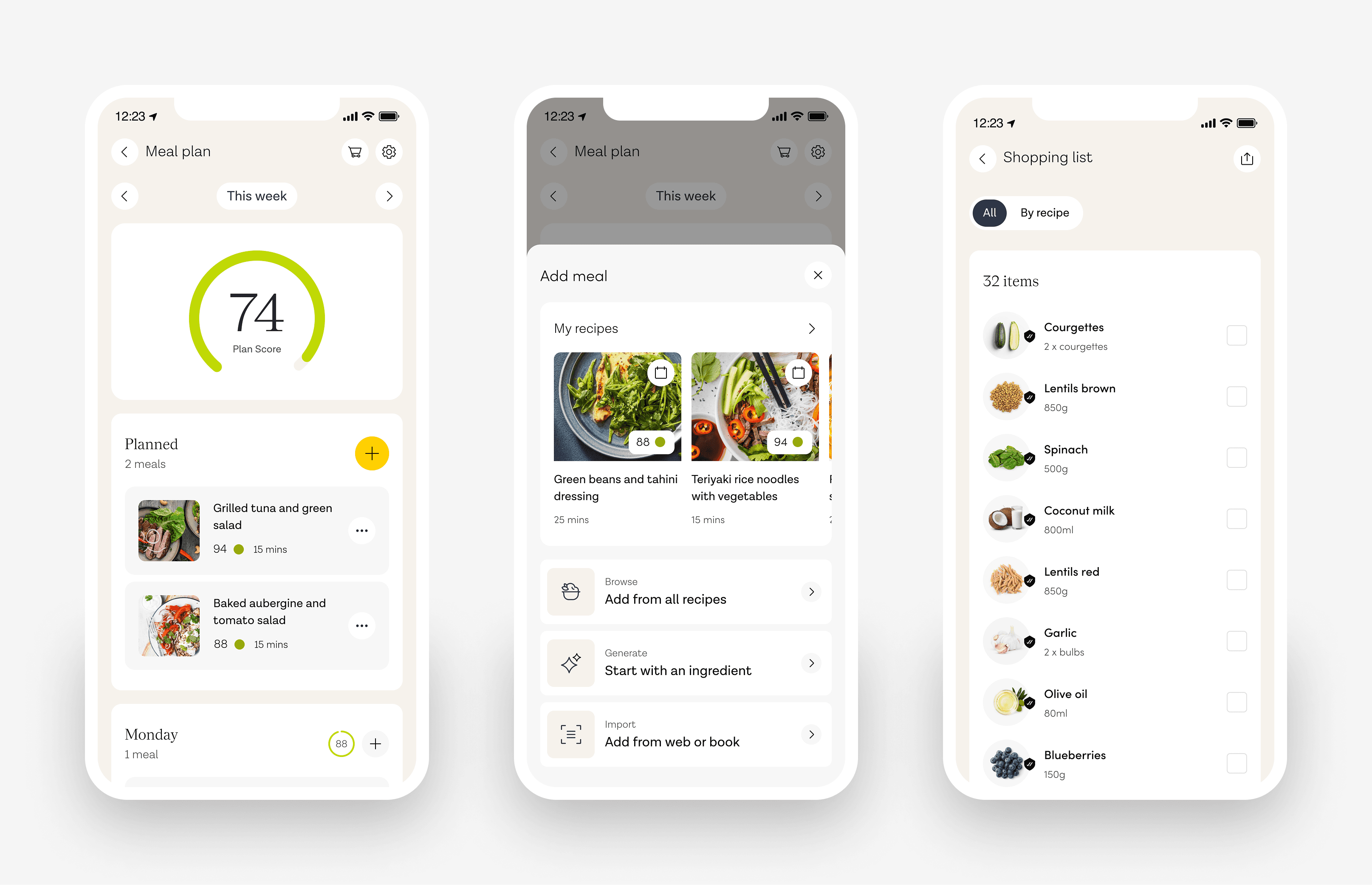
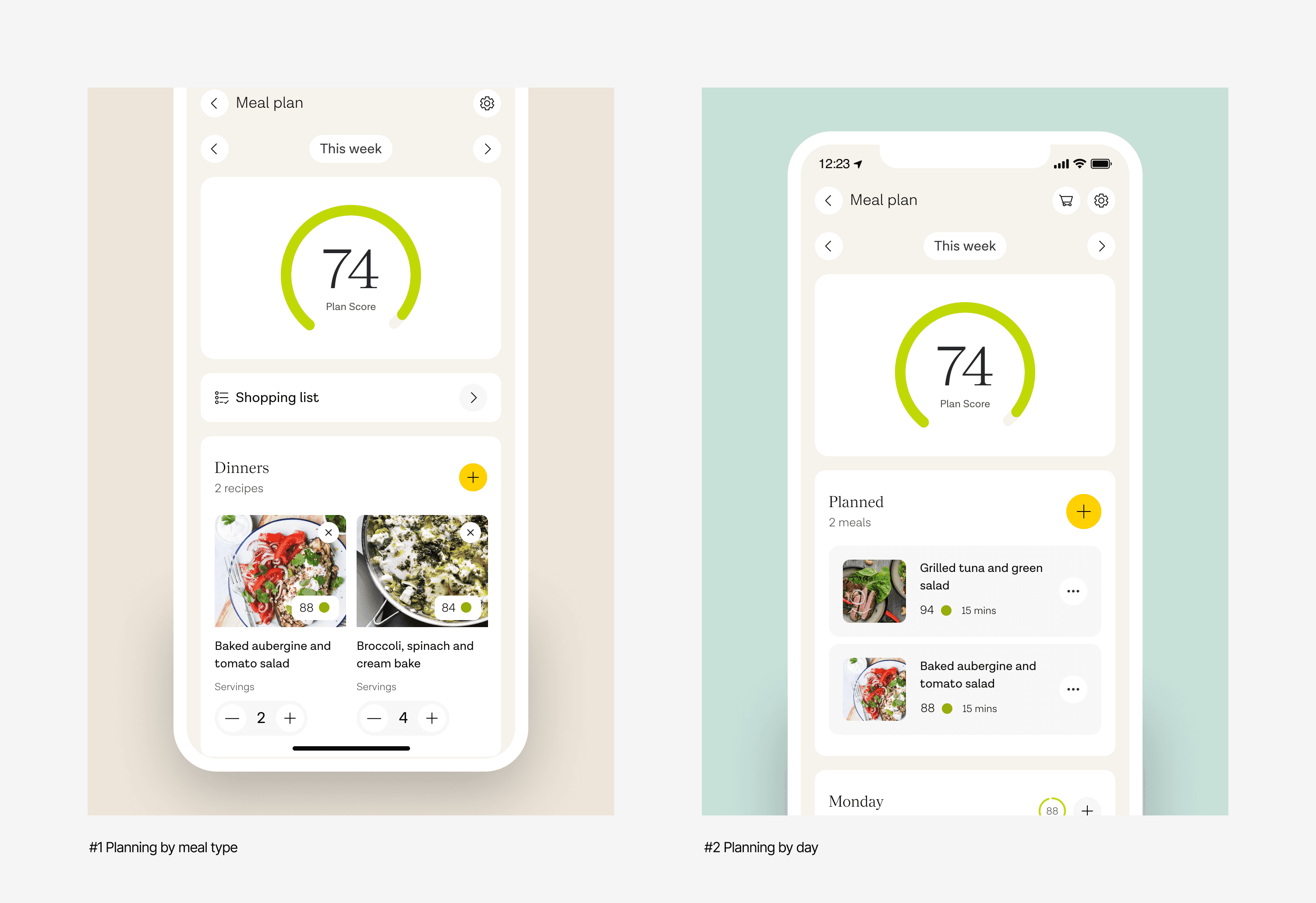
A core challenge was accommodating different planning behaviours. Research consistently showed two patterns:
Flexible planners preferred choosing meals from a general pool
Structured planners wanted to assign meals to specific days
Our initial experience organised meals by type, such as breakfast and dinner, while offering optional daily scheduling through an existing diary feature. Ongoing feedback showed a need for more integrated day-level planning.
We iterated to support daily scheduling directly within the planner while retaining an unassigned section for flexibility - supporting both behaviours within a single experience.
Building up each plan
To support both focused planning and casual browsing, we introduced a universal ‘add to plan’ action across recipes, allowing members to build their weekly plan with a single interaction.
We also aligned the experience to a weekly cadence, working with coaching and nutrition partners to reinforce planning as a repeatable habit rather than a one-off task.
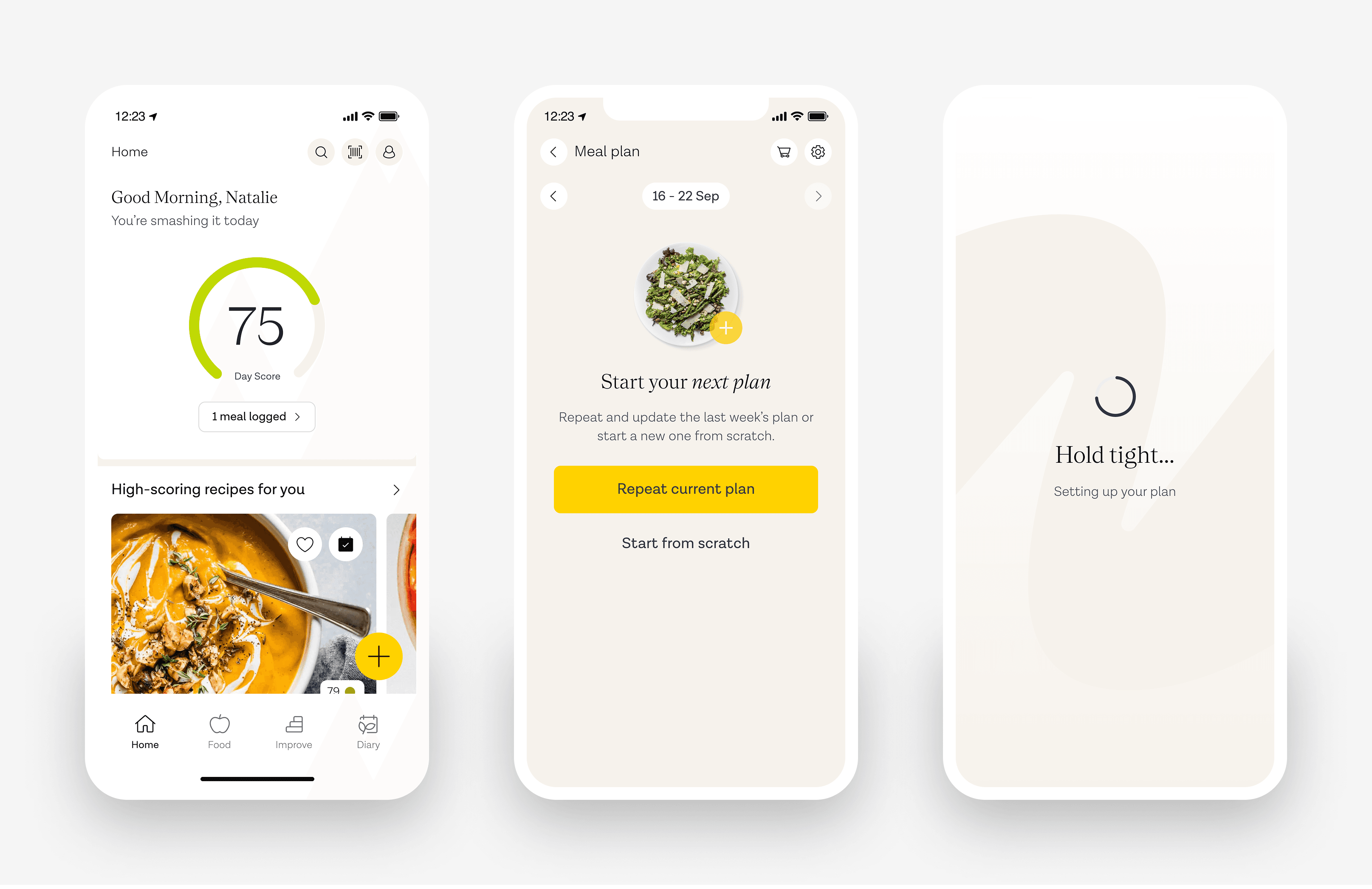
Planning into weekly habits
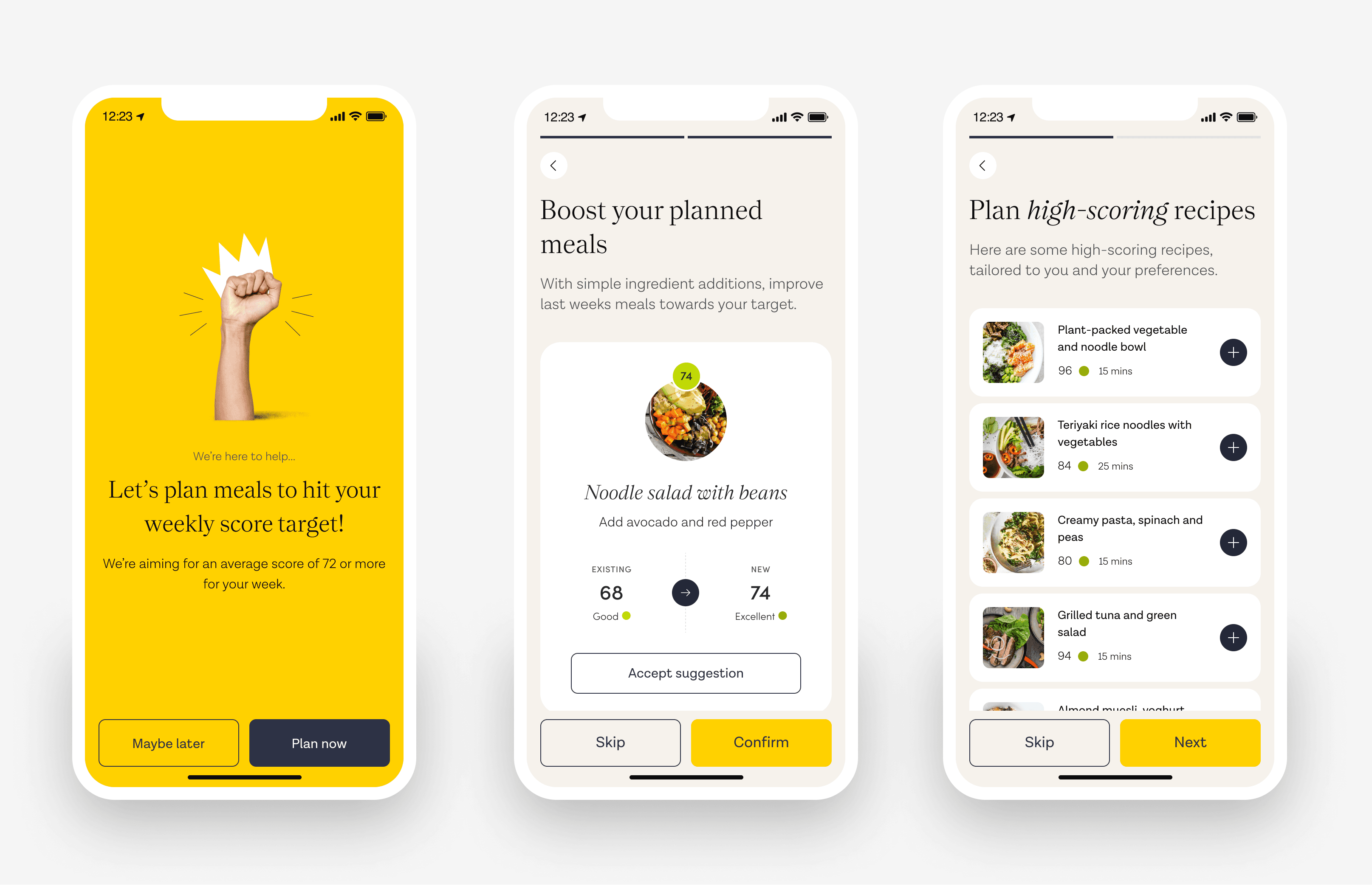
We integrated meal planning into ZOE’s weekly check-in - a high-intent moment where members reflected on the previous week and set goals for the next.
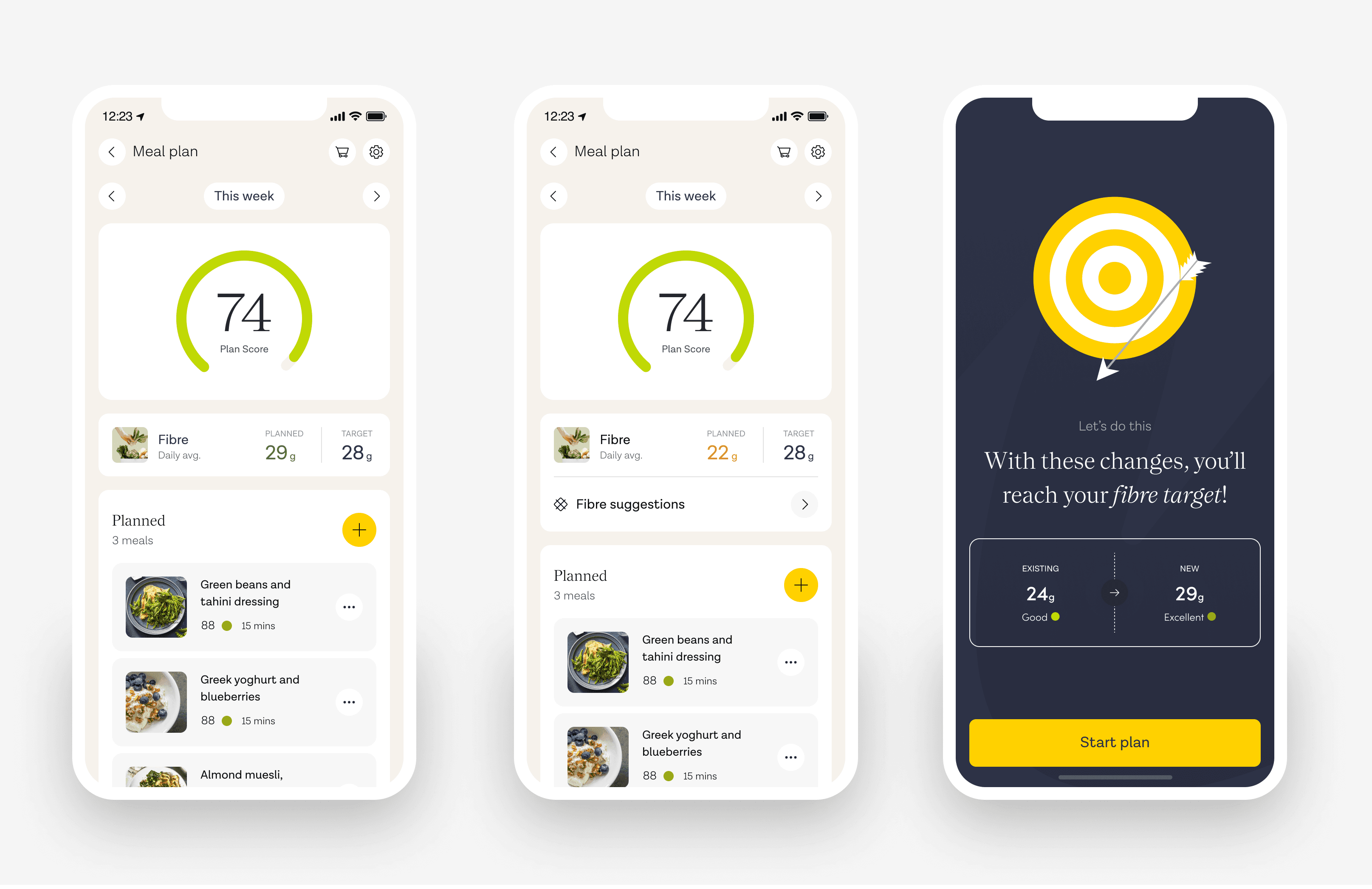
This drove a significant uplift in engagement. It also informed future exploration, where I prototyped and tested richer personalisation and insights to help members improve their plans week by week.
Planning around ingredients
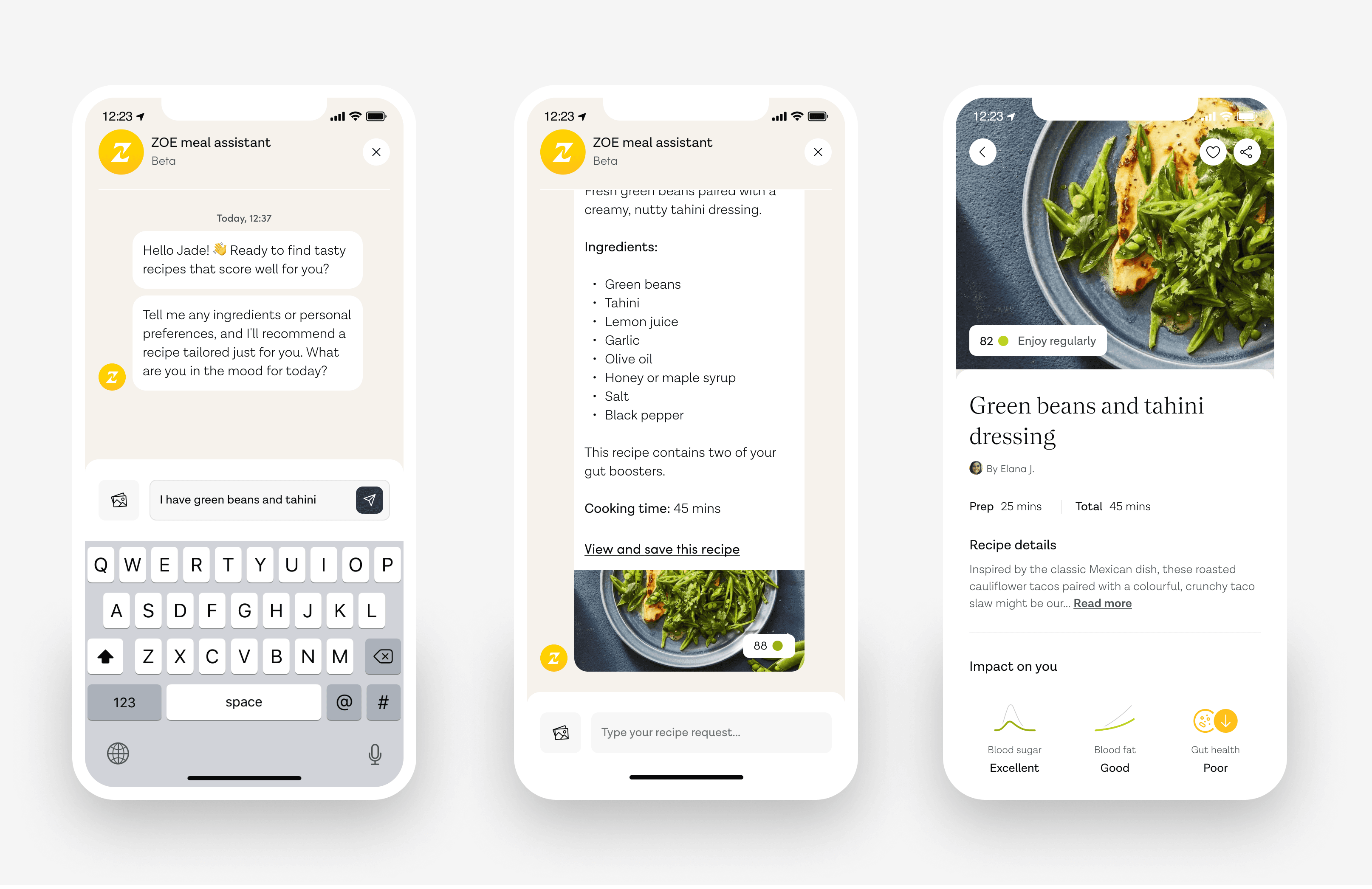
Research showed that members often planned around ingredients they already had. To support this, we introduced an AI-powered recipe generator that turned available ingredients into tailored recipes with methods, imagery and ZOE scores.
Rather than treating this as a standalone feature, we integrated it into the planning experience - helping members move from constraint to a meal they could add directly to their plan.
Outcome and impact
The meal planning experience exceeded all initial success metrics and became a core surface for driving adherence within the ZOE programme. It was later positioned as a foundational part of ZOE’s ‘Programs’ initiative, supporting long-term dietary change through guided steps to improve weekly habits.
"This feature made me use ZOE again. The weekly meal plan allows me to plan healthy recipes for me and the whole family. Without this, I’d leave ZOE.”
ZOE member