Enter password to view
ZOE meal logging
Turning experimental AI into scalable behaviour change
My role
Product Design Lead
Company
ZOE
Themes
Background
Meal logging is central to the ZOE experience, helping members track what they eat and receive personalised health insights. But logging had become increasingly cumbersome, requiring members to manually construct meals by searching for individual ingredients.
The team had begun exploring LLMs and optical character recognition (OCR) to simplify this, particularly for homemade meals and recipes. Early releases showed strong technical potential, but limited real-world impact - members struggled to discover the features, understand when to use them and integrate them into everyday habits.
The core challenge wasn’t AI capability - it was behaviour change.
I led the design of a streamlined AI-assisted logging experience and activation strategy, embedding these tools into natural user flows to accelerate time-to-value and lay the foundations for more passive forms of logging.
Framing the problem
Early AI experiments showed that meal logging could be dramatically simplified, but low discovery and unclear first-time experiences meant only a small subset of members were benefiting.
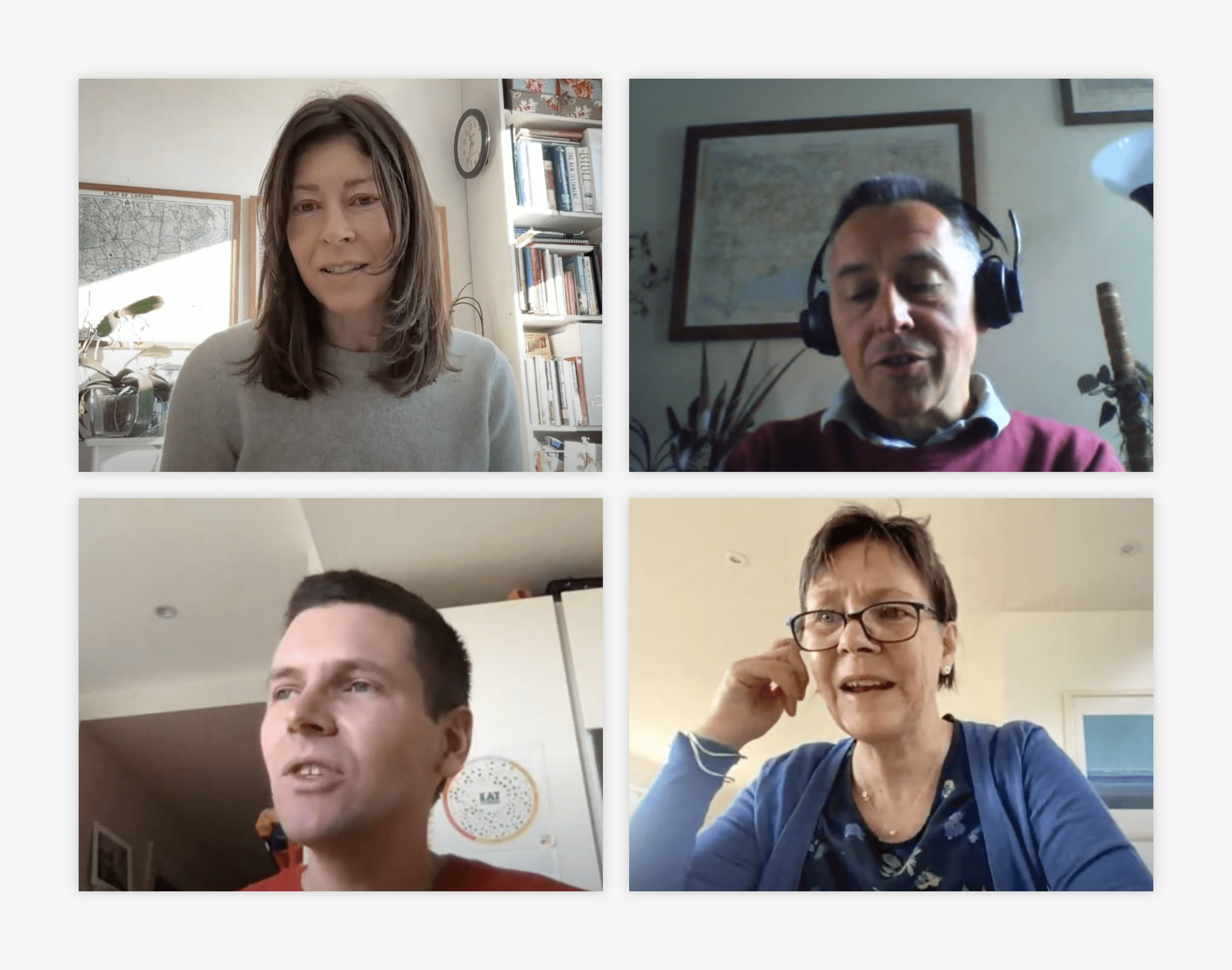
I led a focused discovery phase to understand where adoption was breaking down, combining customer interviews, behavioural data and a review of the existing logging experience.
This surfaced three high-leverage opportunities:
Awareness and first-time value - members didn’t naturally discover or understand when to use the tools.
Search as the broken entry point - logging journeys often stalled when meals or recipes couldn’t be found.
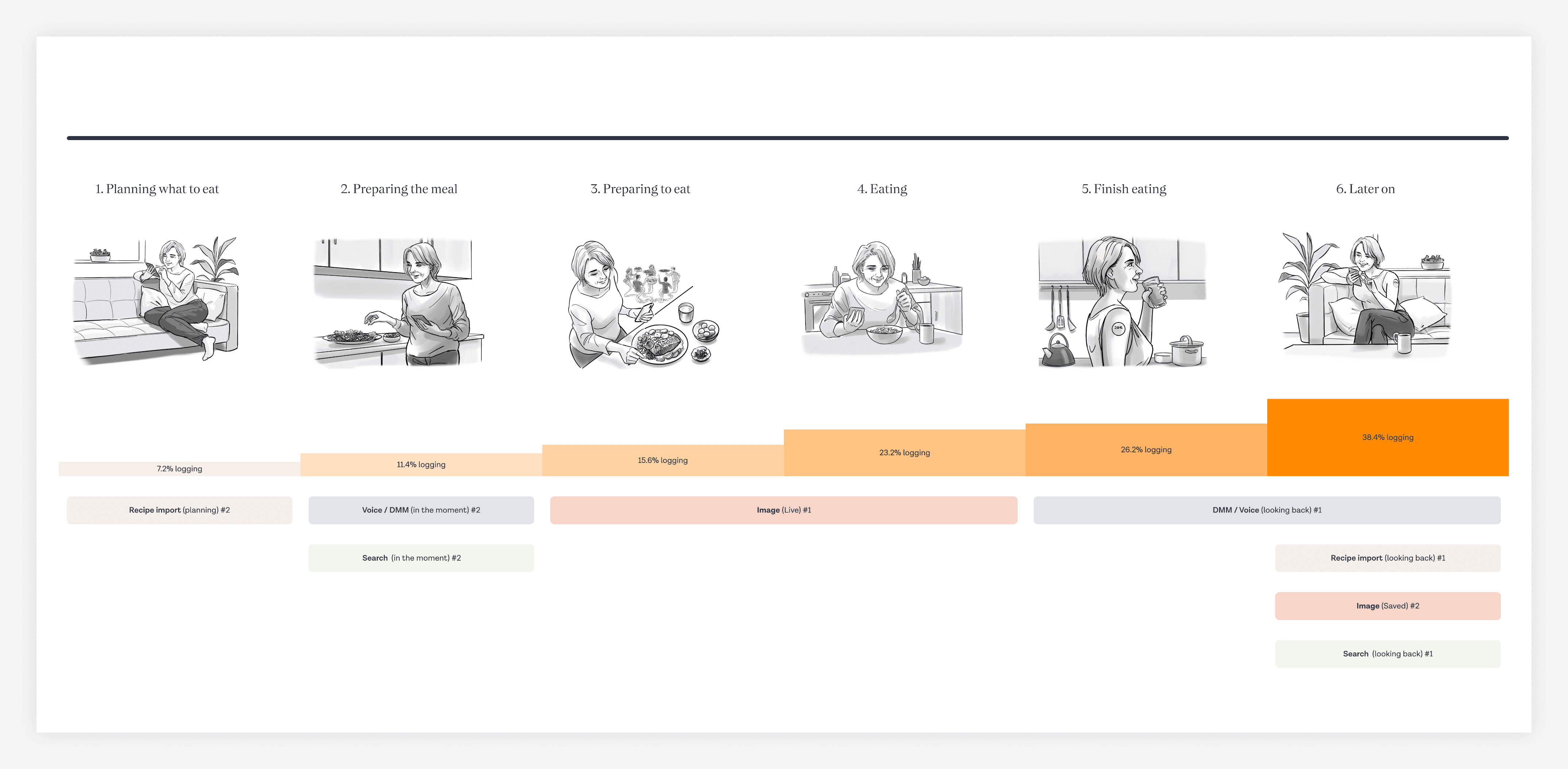
A shift toward passive capture - members showed strong demand for logging by photo rather than manual input.
The strategic direction became clear - move logging from manual construction towards AI-assisted capture, while bringing these capabilities into moments already familiar to members.
Shaping the solution
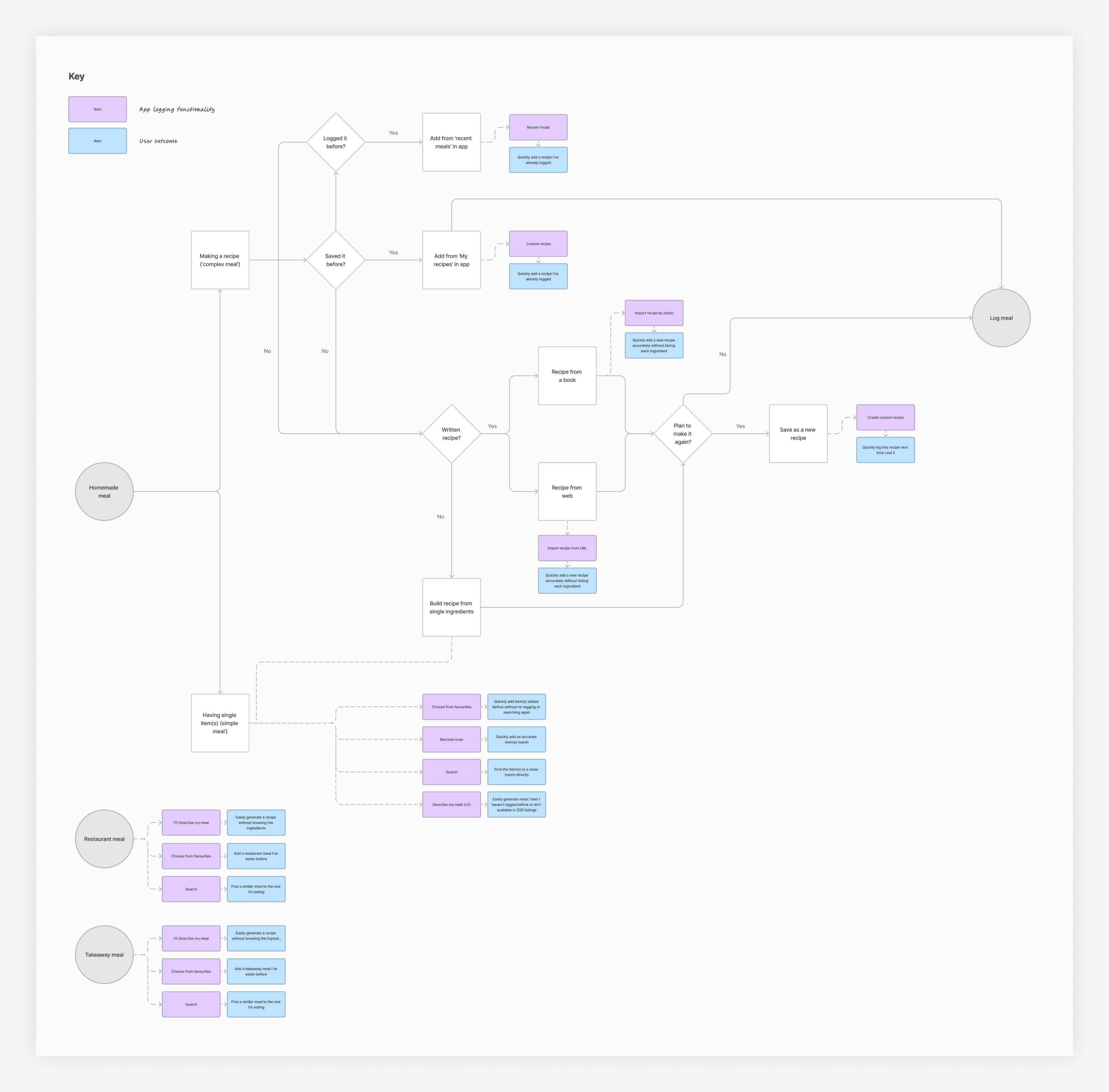
I aligned the team around a sequenced approach to drive adoption and long-term behaviour change - embedding AI into moments members already used rather than treating it as a standalone capability.
Progressive activation through onboarding
Guide members to early ‘wow’ moments through high-value logging actions, reducing reliance on passive discovery.
AI embedded directly into search
Turn failed searches into moments of creation, enabling members to generate meals or recipes when existing content wasn’t available.
Foundations for passive logging
Explore image-based capture as the longer-term evolution of meal logging, reducing manual effort further over time.
Rather than delivering everything at once, we sequenced these bets around the experiences most likely to shift behaviour, validating impact through experimentation before scaling.
Driving discovery and first-time value
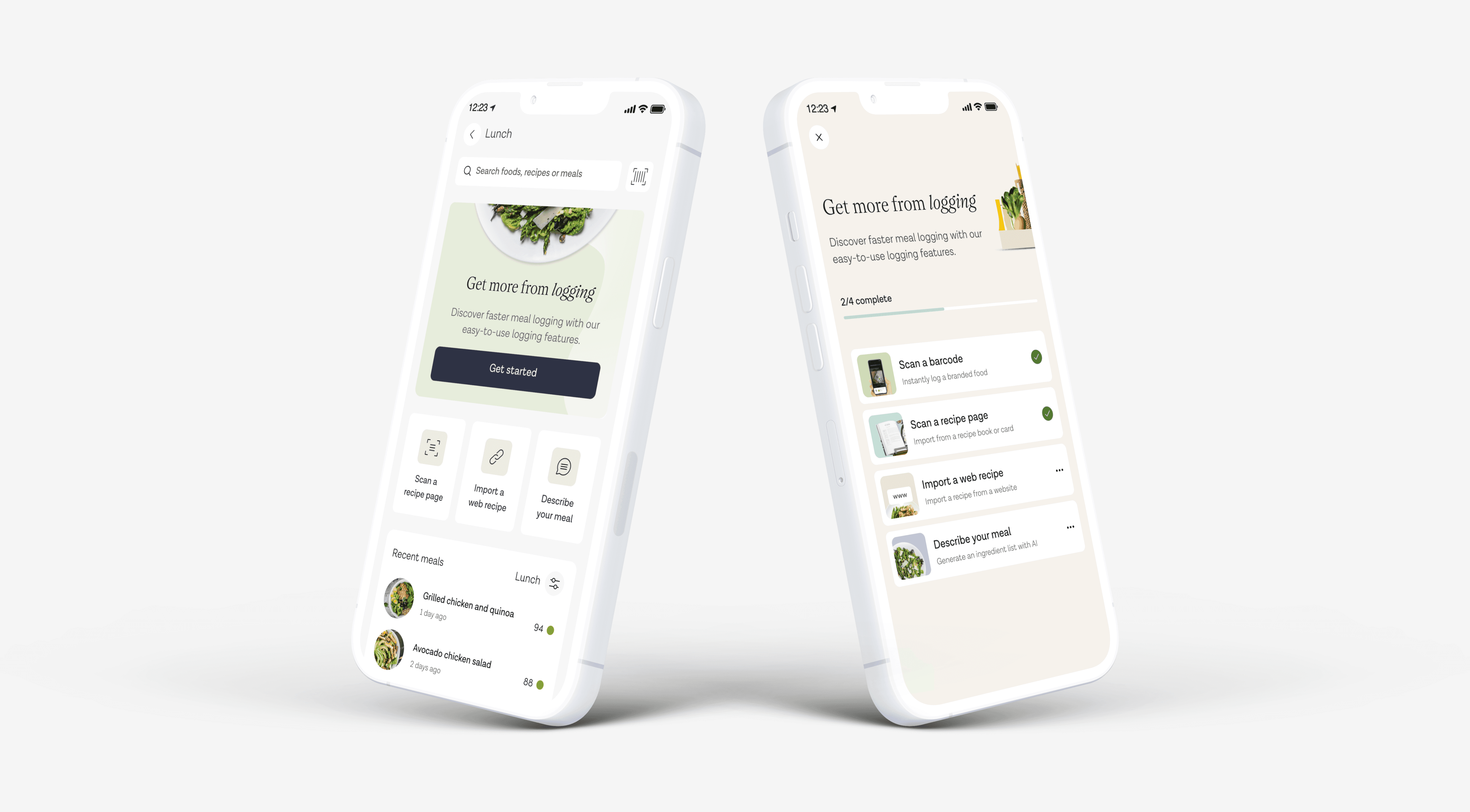
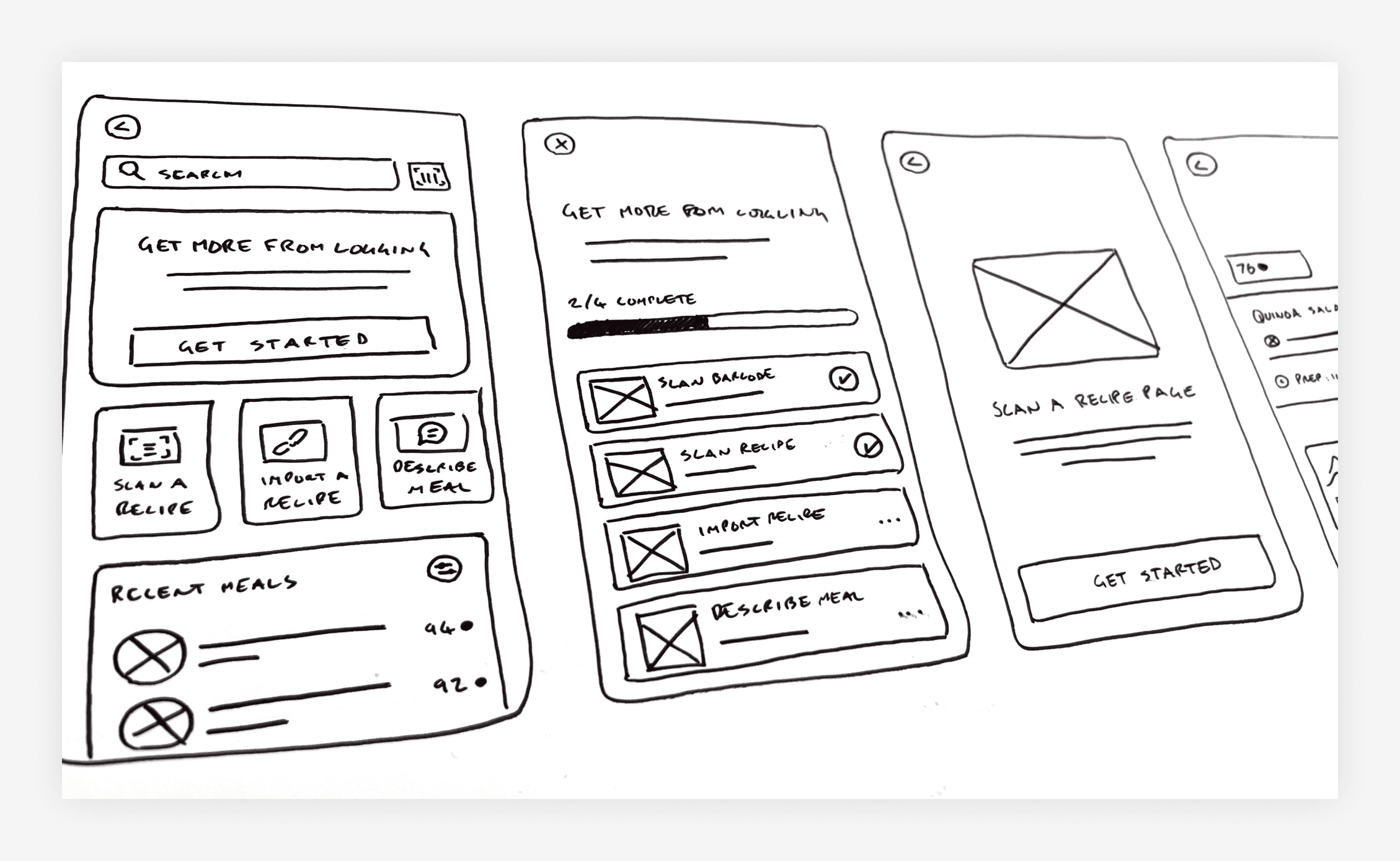
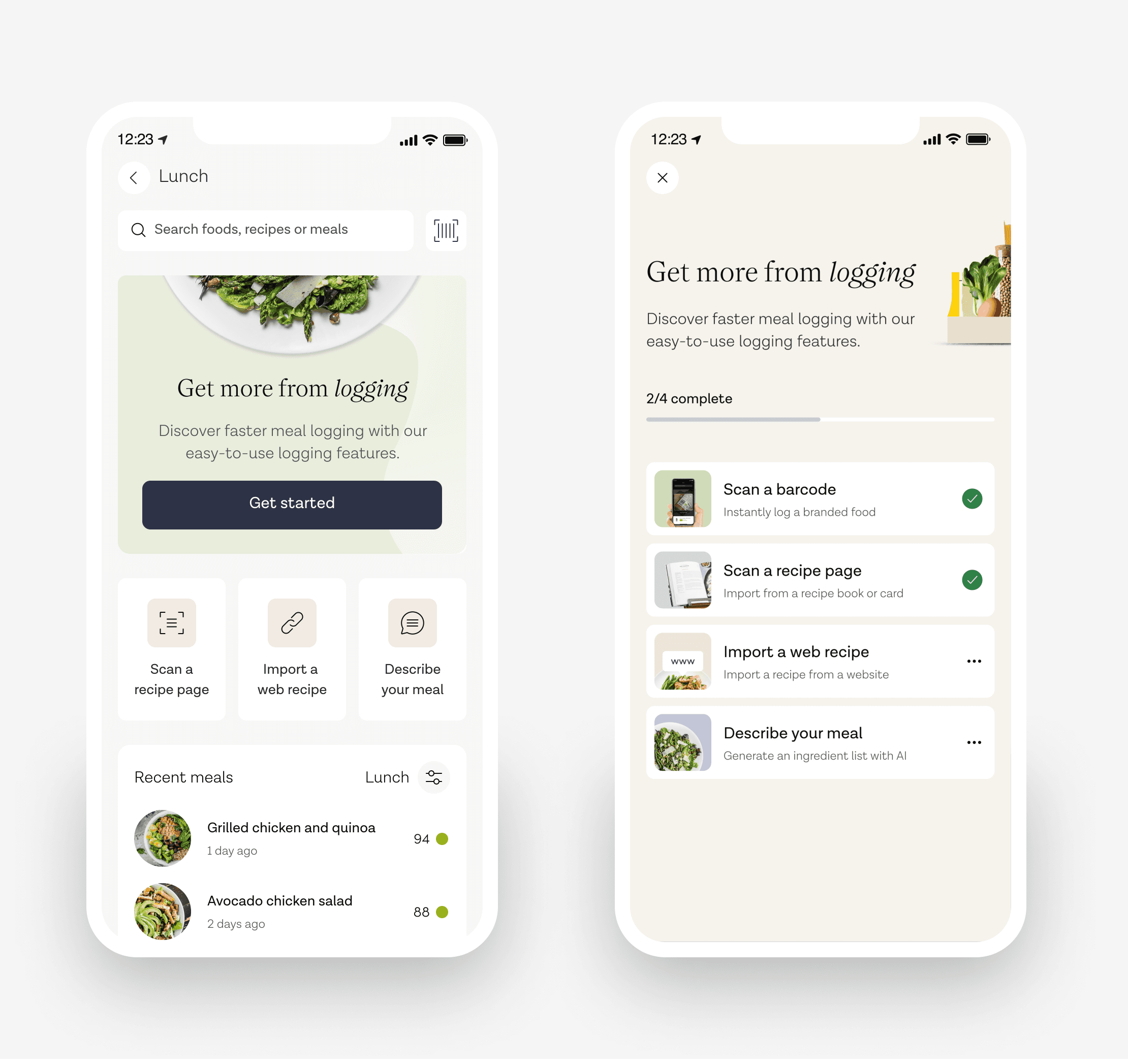
To accelerate adoption of AI-assisted logging, we introduced a new ‘Get more from logging’ experience - progressive onboarding designed to guide members towards high-value actions.
A simplified logging screen made different logging paths explicit and connected common use cases directly to relevant AI-powered features, reducing the gap between discovering a capability and successfully using it.
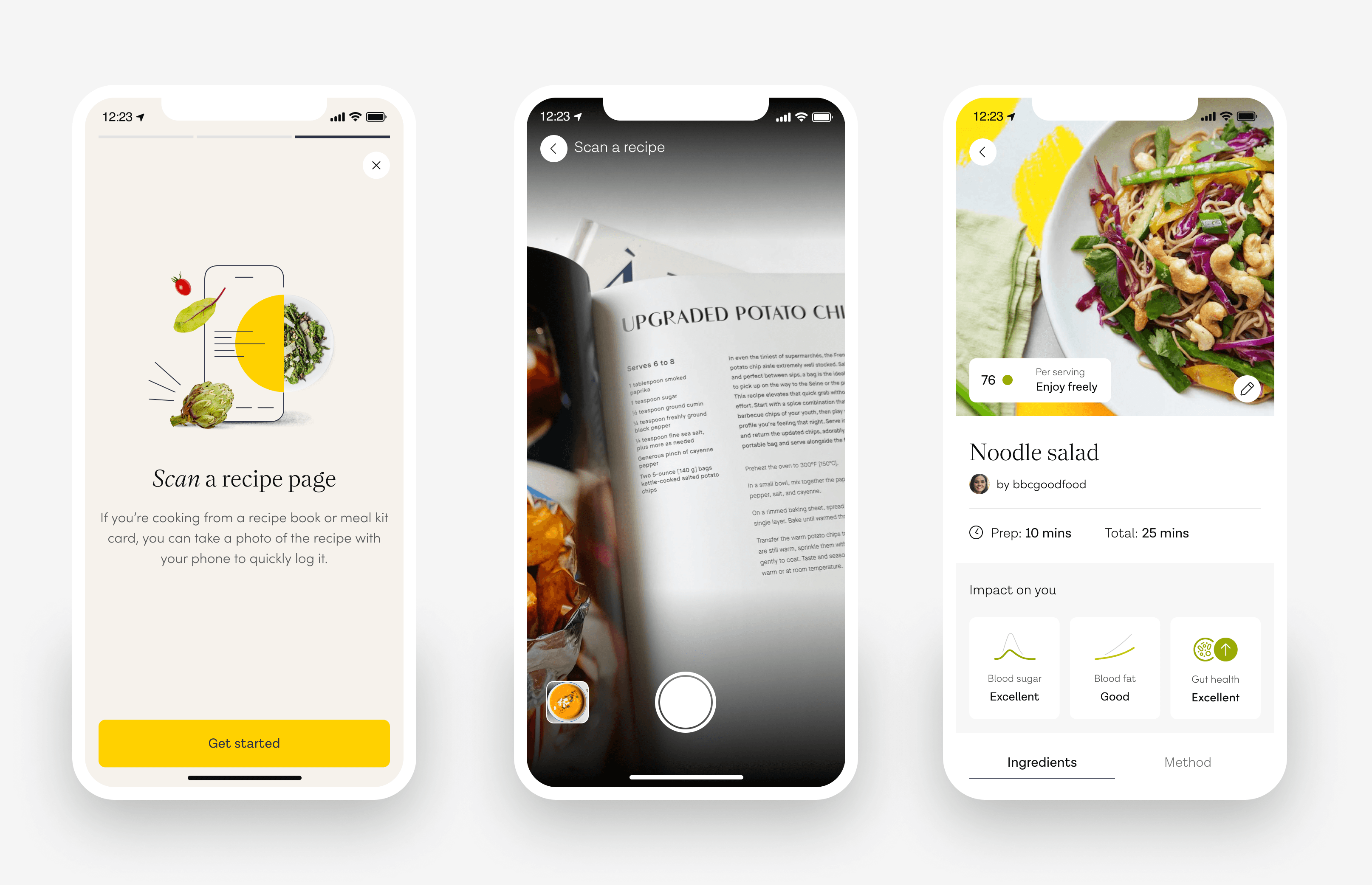
Alongside this, we embedded lightweight, in-context education within each flow, using examples to help members get started without pulling them out of task.
Testing also led us to deprioritise a fully guided product tour. It added friction without meaningfully improving activation, so we focused instead on task-driven onboarding that reduced time-to-value and drove higher adoption of AI-powered logging tools.
Turning search dead-ends into AI creation
Search was the most common starting point for meal logging - and its most frequent point of failure. When members couldn’t find a meal or recipe, they were forced into manual construction, creating significant friction.
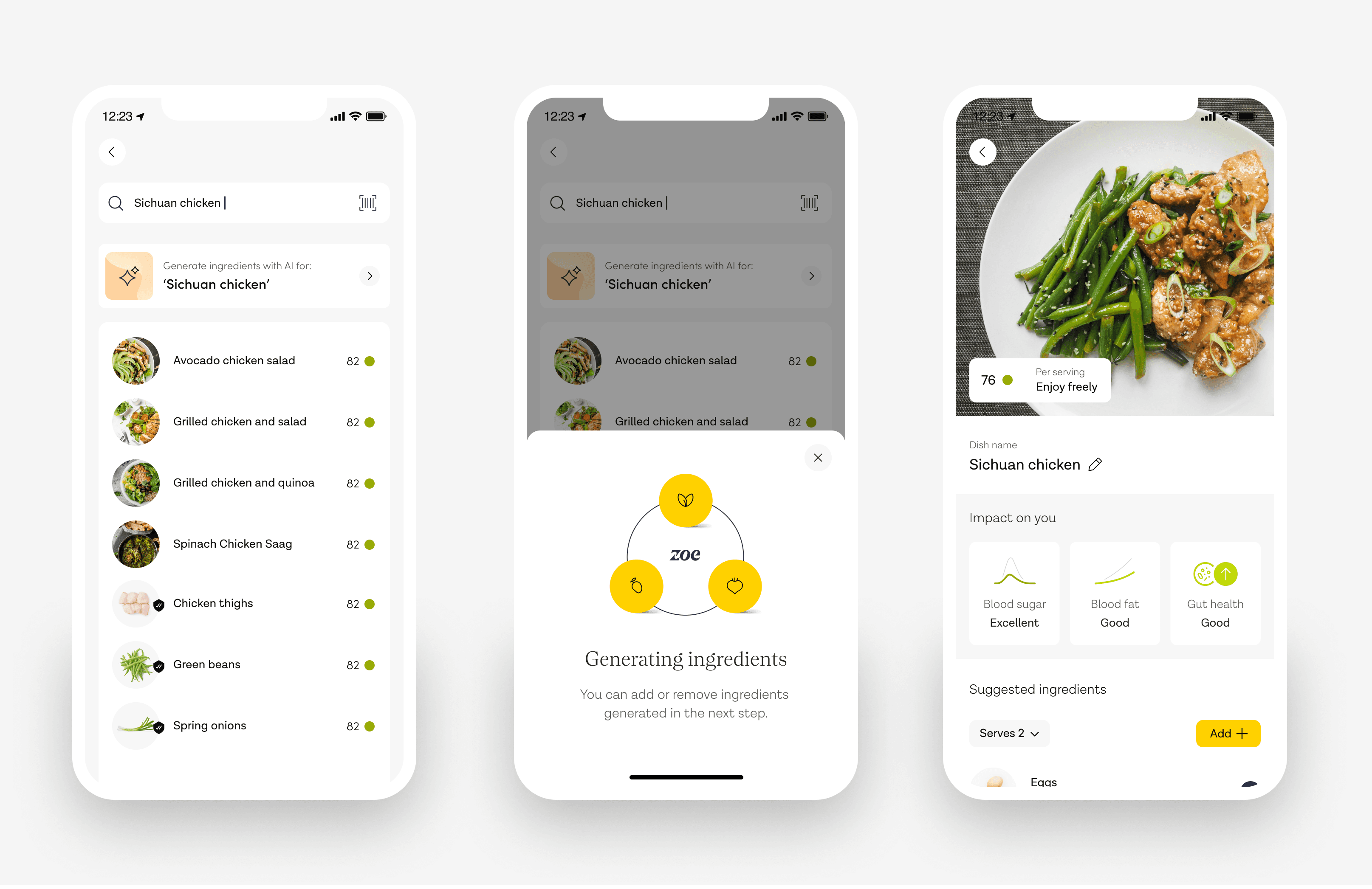
We embedded AI directly into search so that when useful results weren’t available, members could generate a meal or recipe from their query - turning a dead end into a moment of creation.
Through iteration and testing, we evolved this from a simple prompt into a contextual card that clearly communicated what would be generated.
We also found that educational content within search reduced conversion. Members prioritised speed over learning in this task-focused moment, so we moved education into the broader onboarding experience.
This increased usage of AI meal generation by 41%.
Building the future of logging through images
Research pointed to image-based logging as the natural longer-term evolution of meal capture - reducing effort further and moving towards more passive tracking.
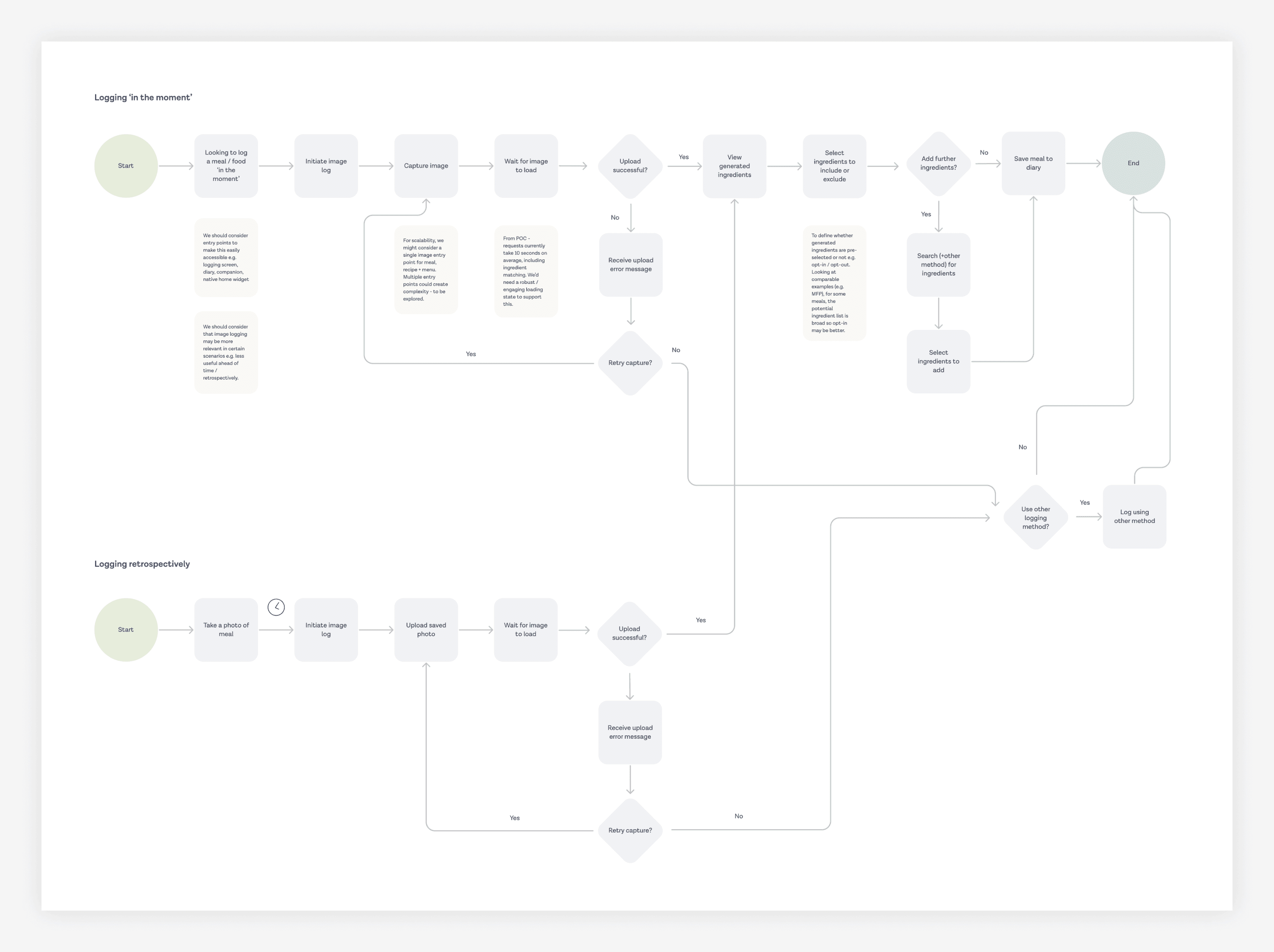
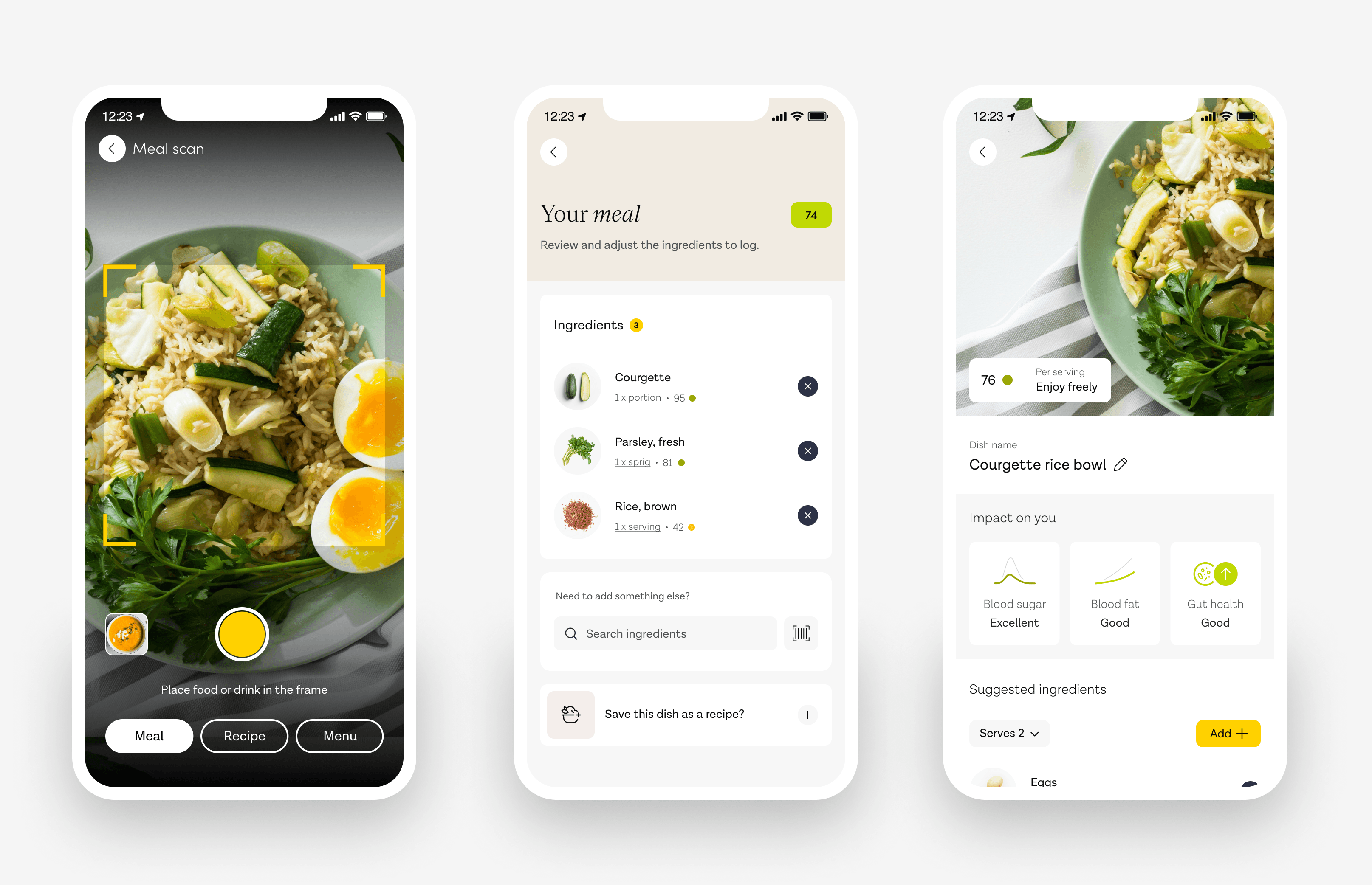
I led early work to explore this direction, designing and prototyping an experience that allowed members to photograph meals and automatically generate editable ingredient lists.
In parallel, we ran a technical proof of concept to validate image-to-ingredient accuracy, generation speed and overall feasibility. Once viability was established, I partnered with product and engineering on rapid prototyping and user testing.
The resulting concept could capture meals in seconds, generate editable ingredient lists and significantly simplify saving recipes.
Early testing showed strong engagement and comprehension, helping validate image-based logging as a future direction and informing roadmap prioritisation.
Outcomes
By shifting from isolated AI features to behaviour-driven design, we turned experimental capability into meaningful member value.
Progressive onboarding, embedded AI and clearer first-time experiences contributed to:
+31% adoption of AI-powered logging features
+9% overall logging conversion
+41% usage of AI meal generation
Beyond the immediate impact, the work established a clear direction for logging - moving from manual construction towards increasingly passive, AI-assisted capture.
Our image-based prototypes helped de-risk the next stage of that evolution and informed the longer-term roadmap for logging at ZOE.